

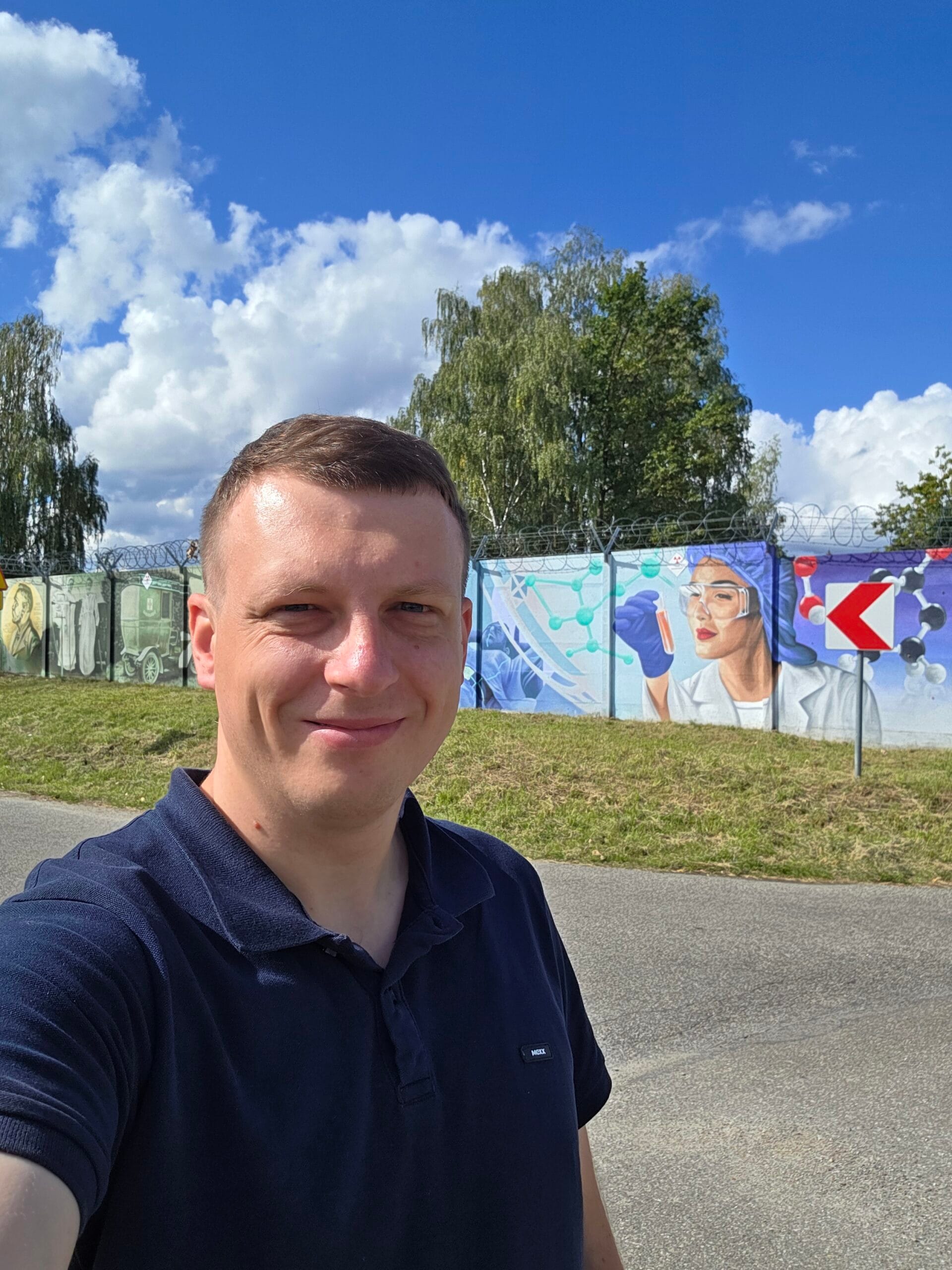
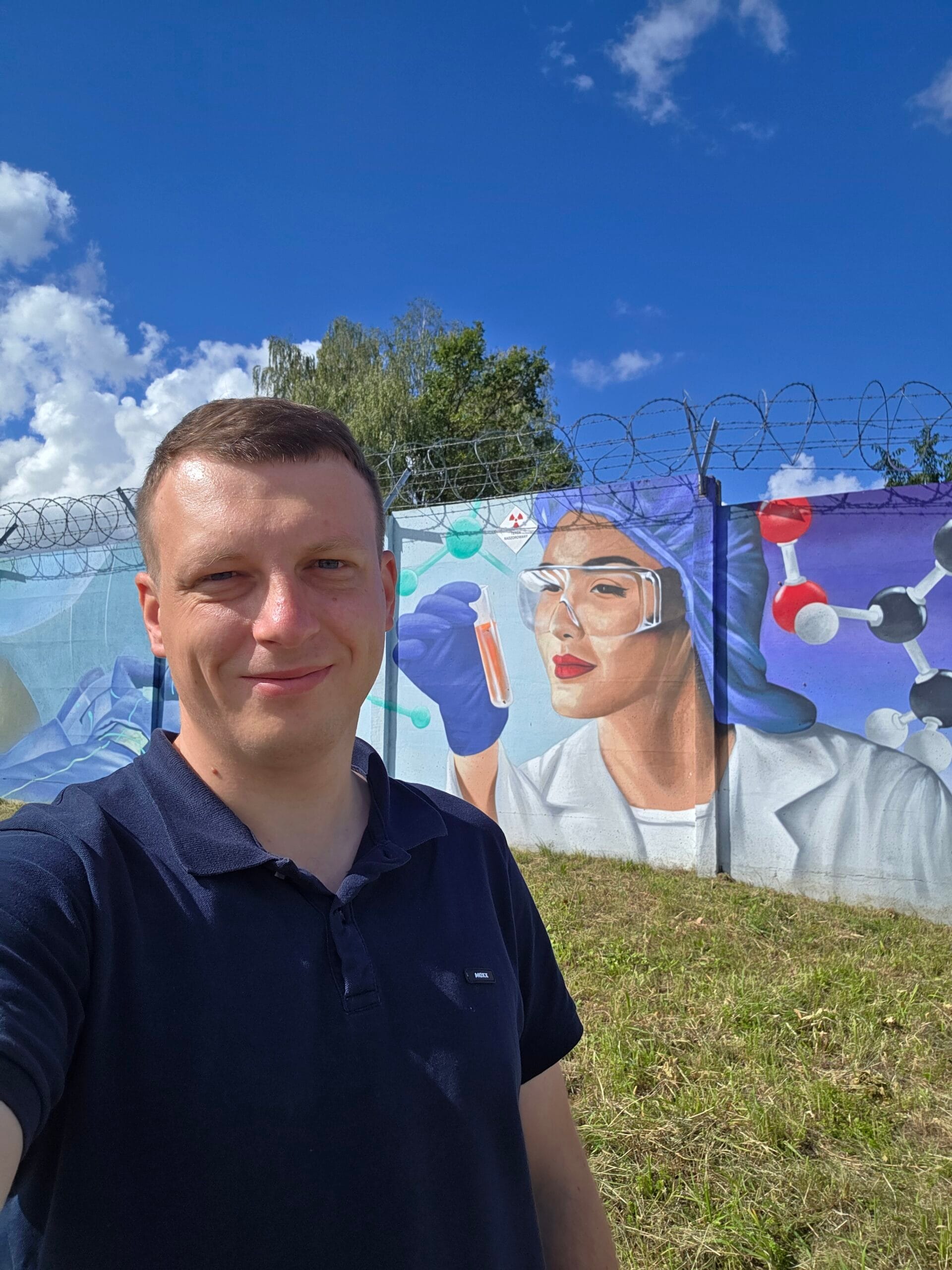
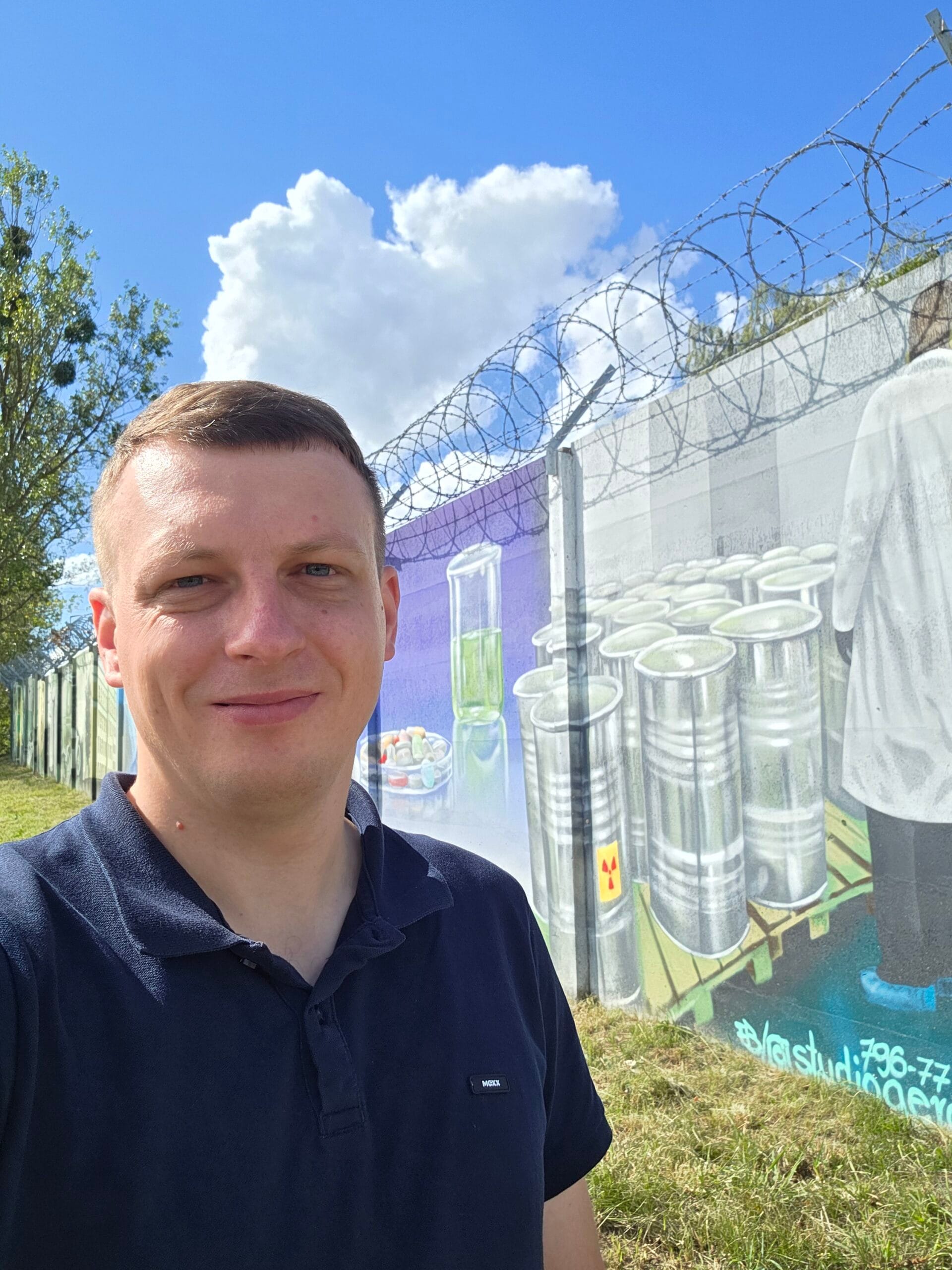
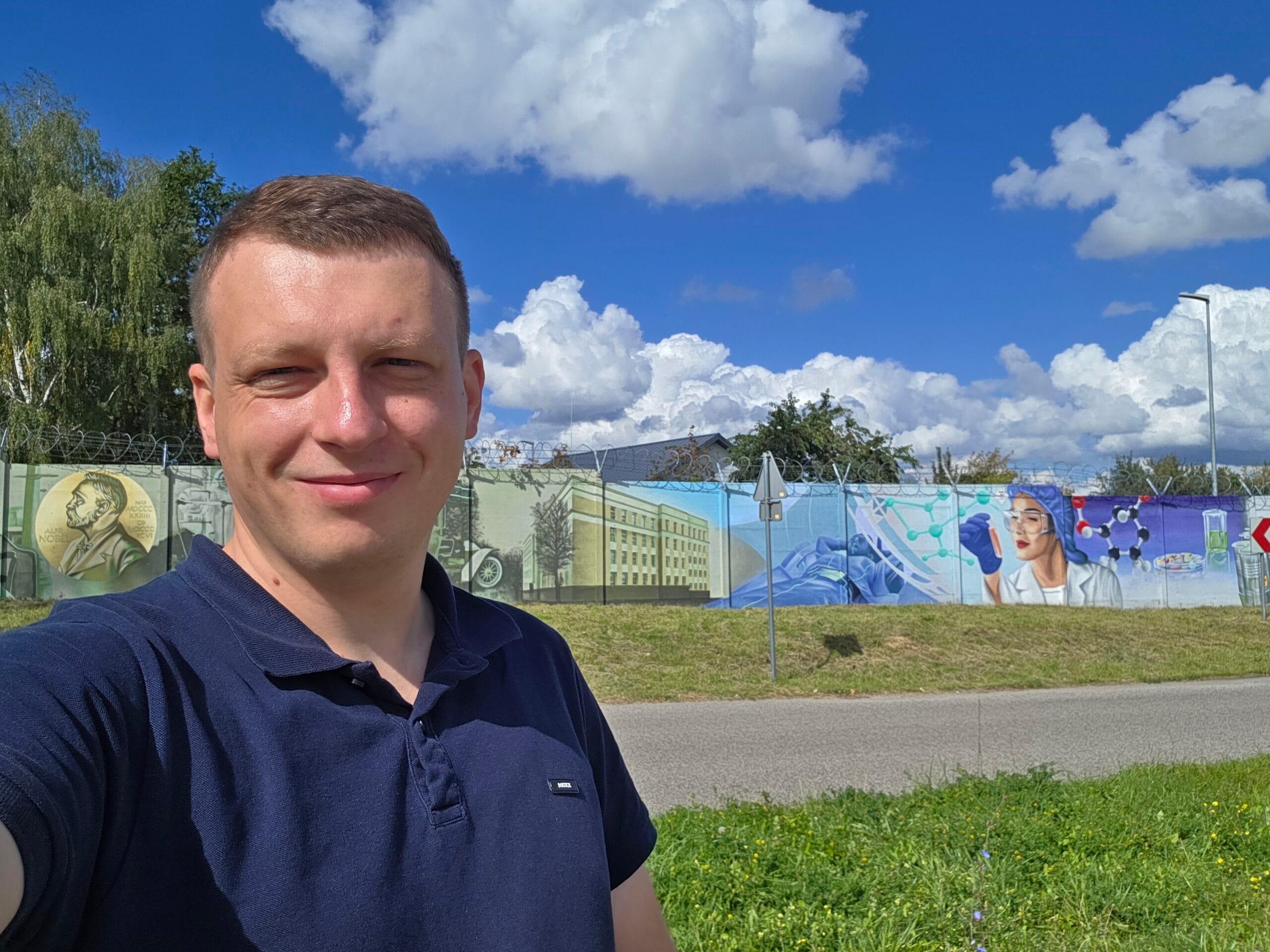
At the mural on the KSOP fence, 12 September 2026
I was inside one of the most closely guarded places in Poland
On 12 September 2026 I took part in the Open Day at the National Radioactive Waste Repository (KSOP) in Różan - the only facility of its kind in Poland, about 90 km north of Warsaw. In 2026 KSOP marks 65 years of operation. Open days are held several times a year, but this is not a place you can simply walk into “whenever you like”.
What KSOP is and why it is in Różan
The National Radioactive Waste Repository has been operating since 1961, so 2026 marks 65 years of its operation. It stands on the site of a former Russian military fort built in 1905-1908, covering 3.045 ha. It is run by the Radioactive Waste Management Plant (ZUOP), part of the National Centre for Nuclear Research (NCBJ). Under the classification of the International Atomic Energy Agency (IAEA), it is a near-surface repository - an above-ground or shallow facility intended for short-lived low- and intermediate-level waste and for the interim storage of long-lived waste.
What the tour looked like
Registration was done in advance by email - it was open until 10 September or until places ran out. You had to give your full name, the series and number of your ID card or school ID and your preferred time; on the day you had to bring an identity document, arrive 15 minutes before your slot and sign a declaration. Tours ran in 3 rounds - 10:00, 12:00 and 14:00 - in groups led by ZUOP staff. You can leave your car at a large free car park by the mural - from there it is about 300 m on foot to the entrance.
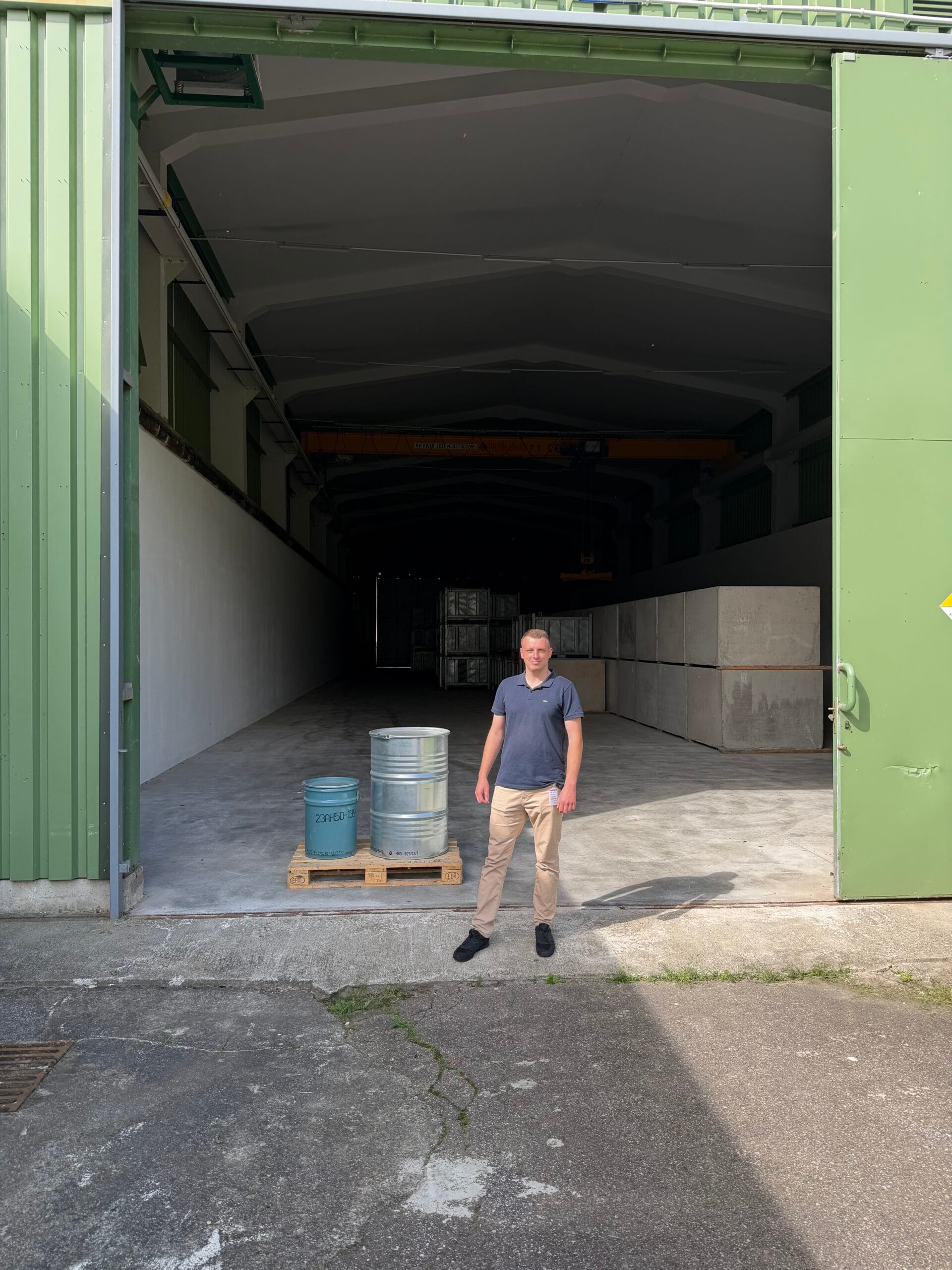
Part of the route led literally over concreted-in waste - underfoot, at a depth of 6-7 metres, lie layers dating from the 1960s and 1970s. Along the route we were also shown 2 types of waste containers: the smaller one is a hobbock and the larger one a steel drum.
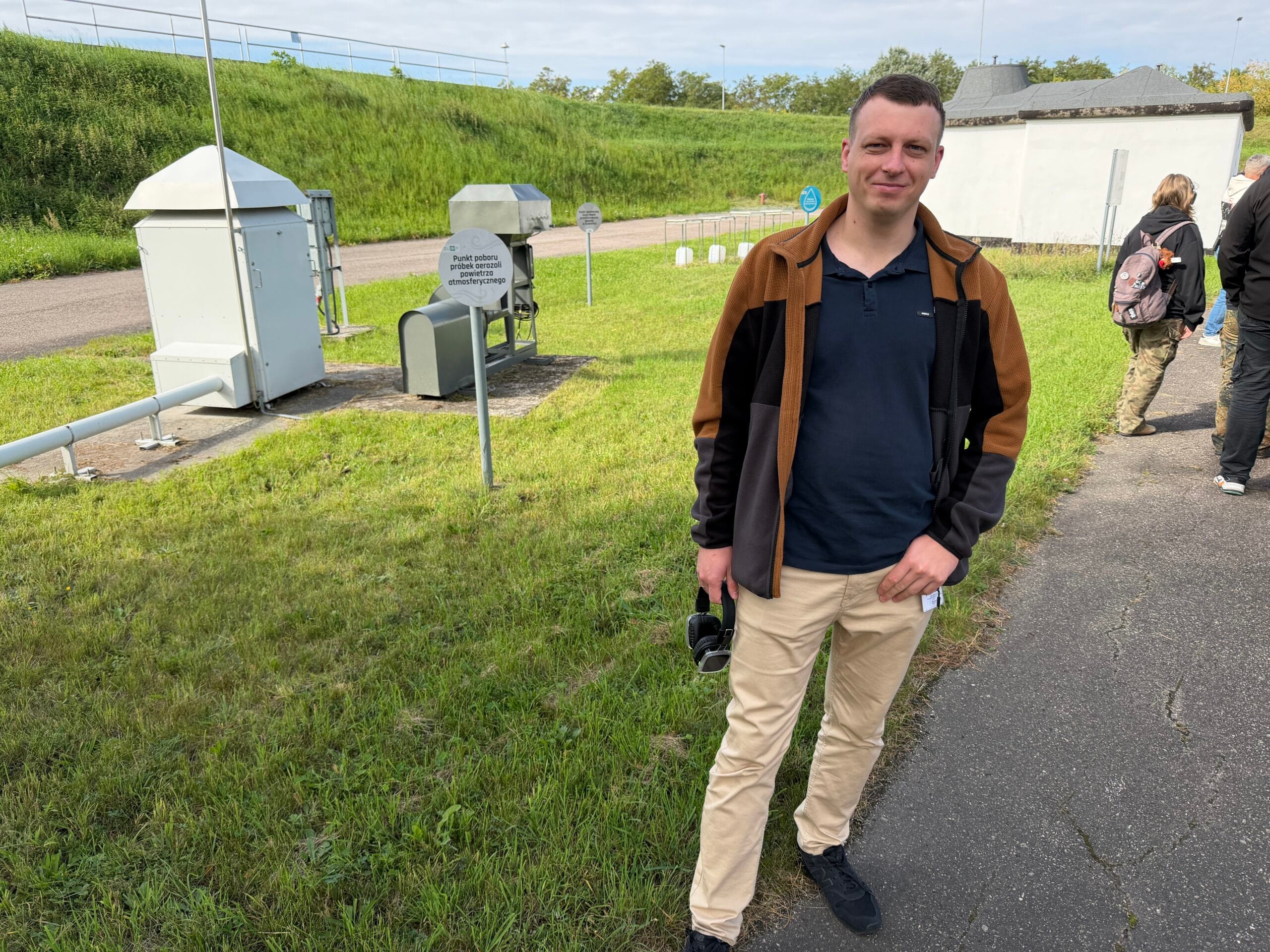
The programme also included an atmospheric air aerosol sampling point - part of the continuous environmental monitoring around the repository, alongside testing of soil, water and vegetation.
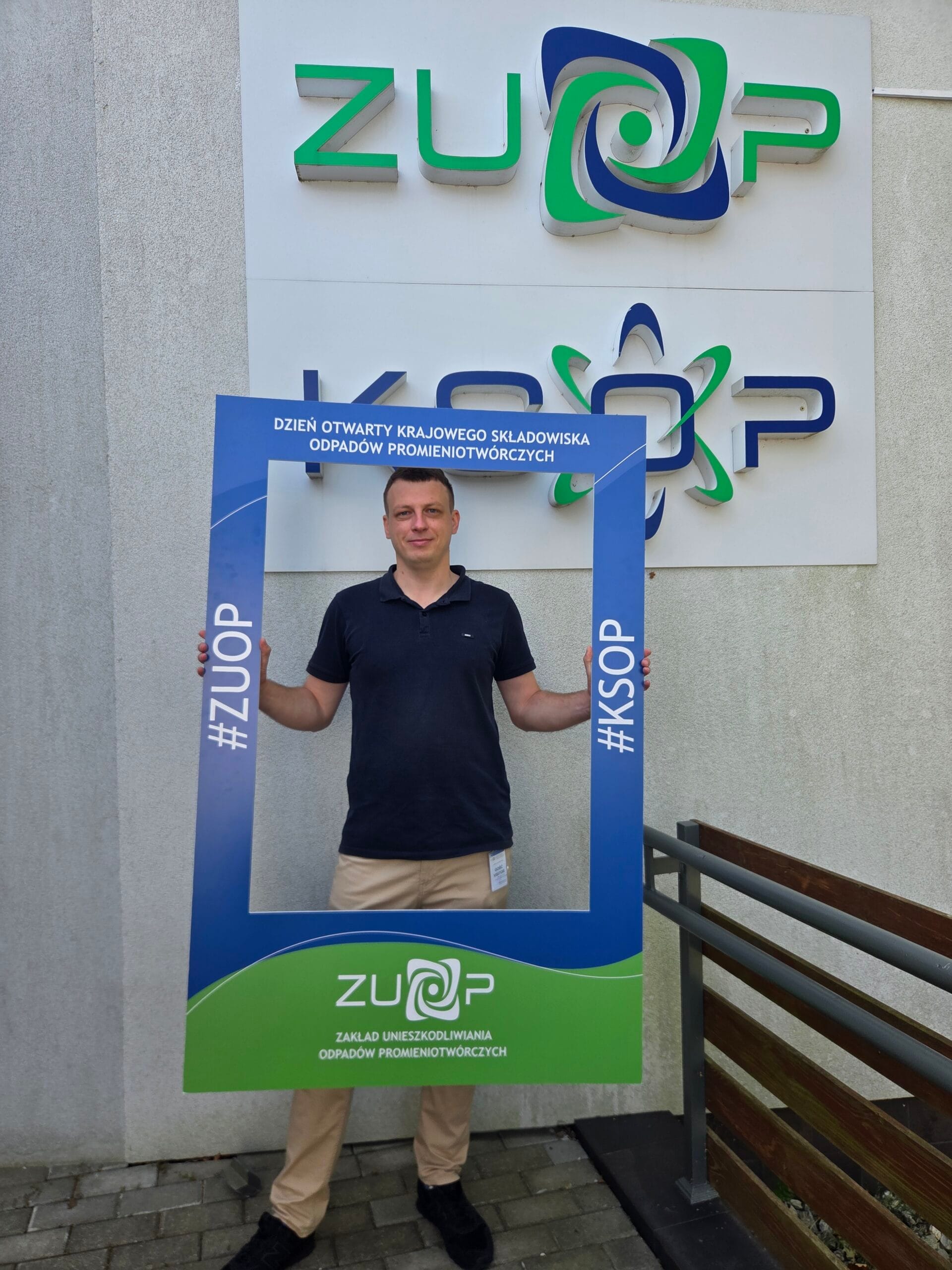
There was also a photo frame with the hashtags #ZUOP #KSOP and an Instax print as a souvenir. I had one taken too.
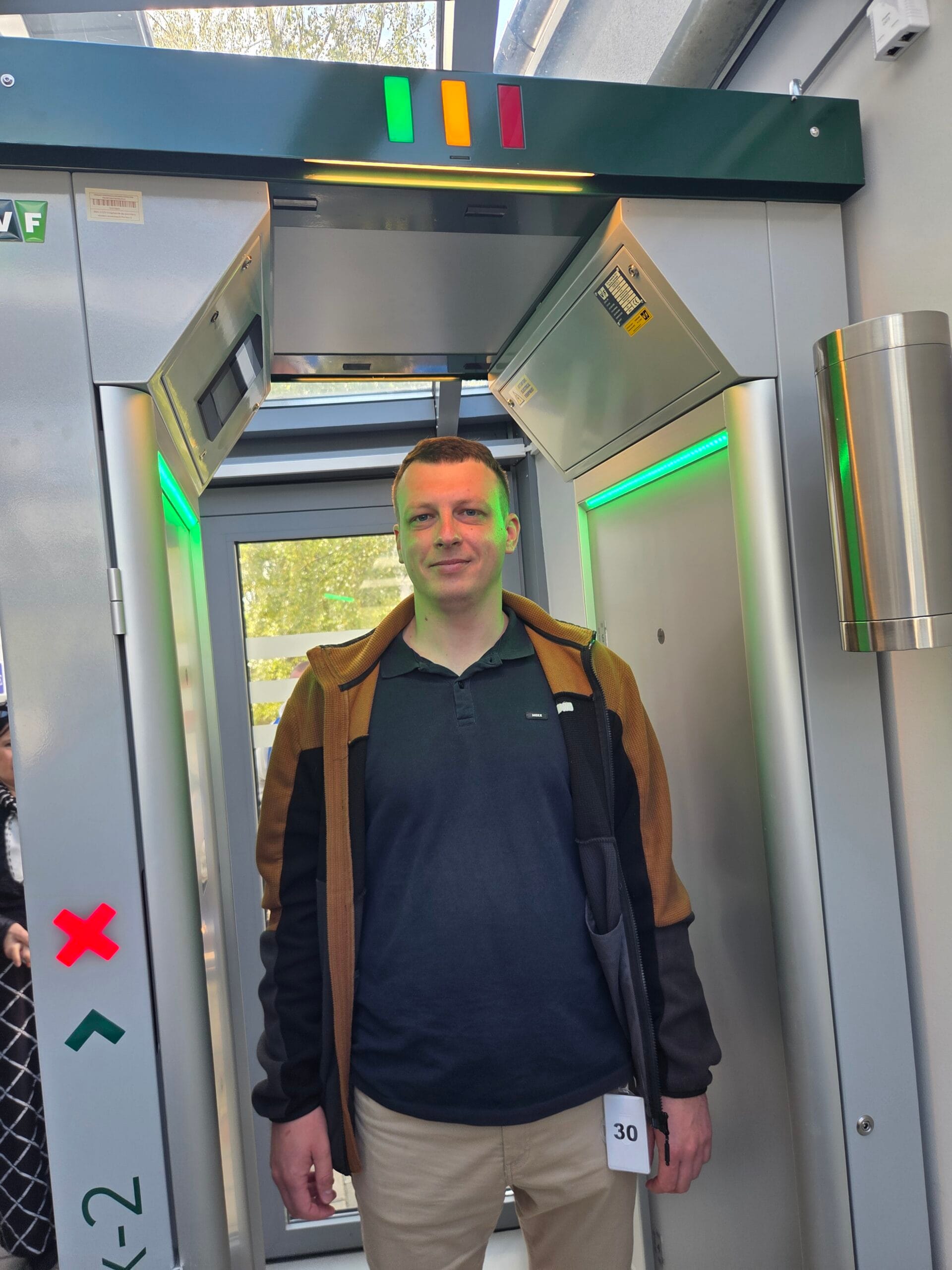
On leaving the site, every visitor goes through the same check as the staff do every day. First the radiation portal monitor - a passive device that continuously measures the radiation level of people and objects leaving the protected area; it does not emit radiation, it only detects it.
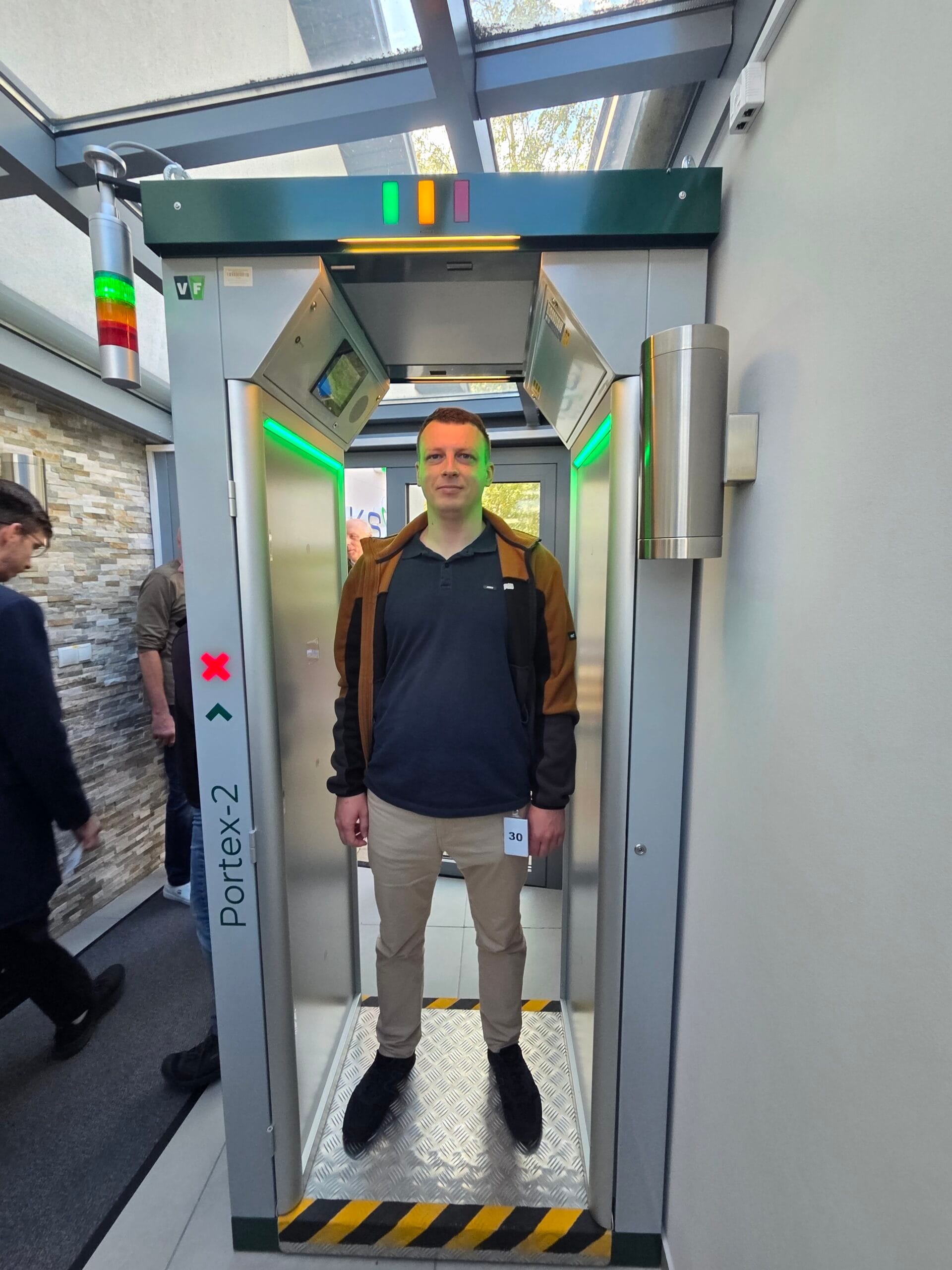
Next came the hand and foot contamination monitor, which every visitor could step onto - a device from the same family as HFC (Hand-Foot-Clothing) monitors, routinely used at exits from areas with a higher risk of radiation exposure. The display showed “Gotowy do pomiaru” (Ready to measure), and a moment later “Brak skażeń” (No contamination).
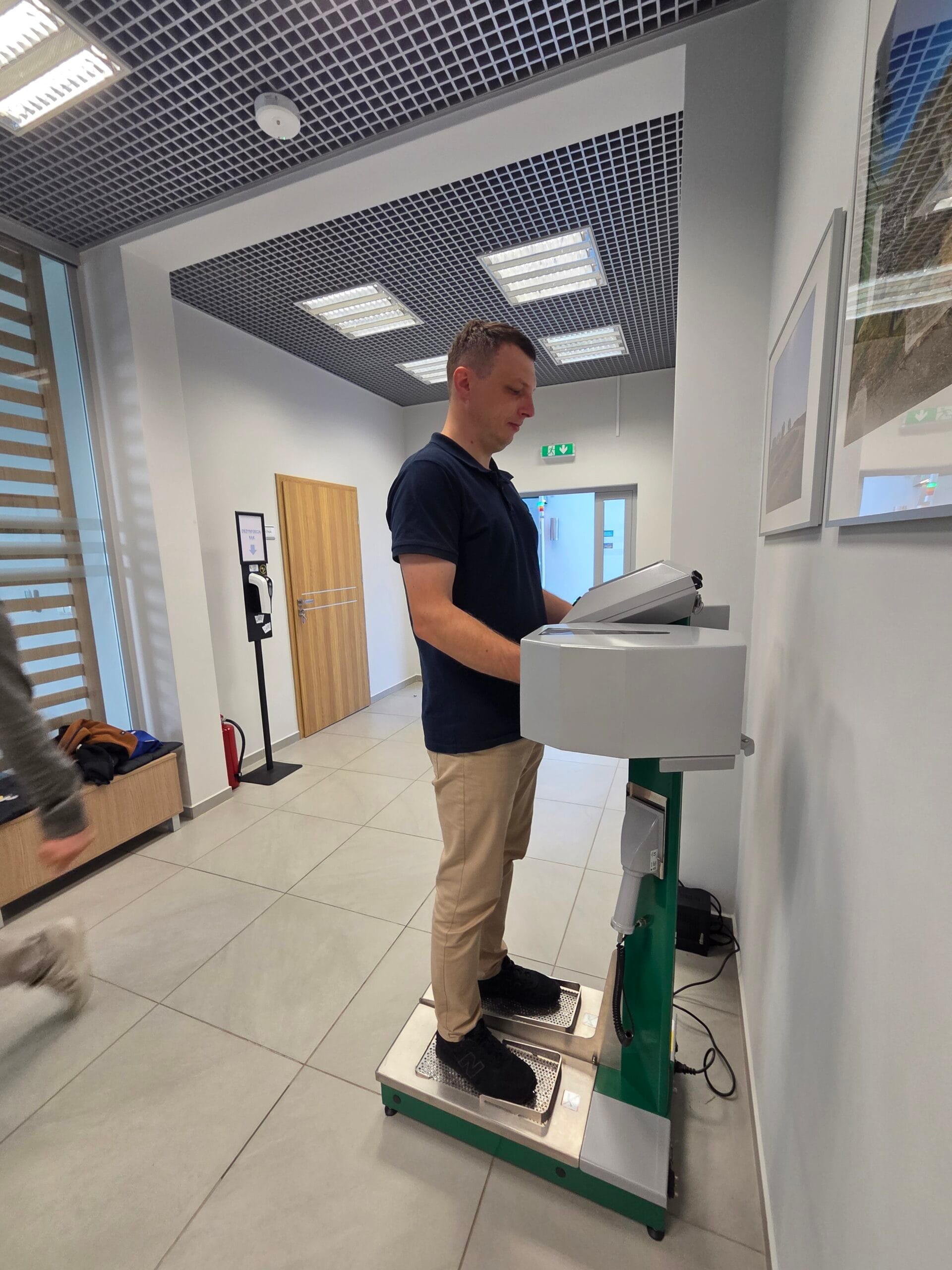
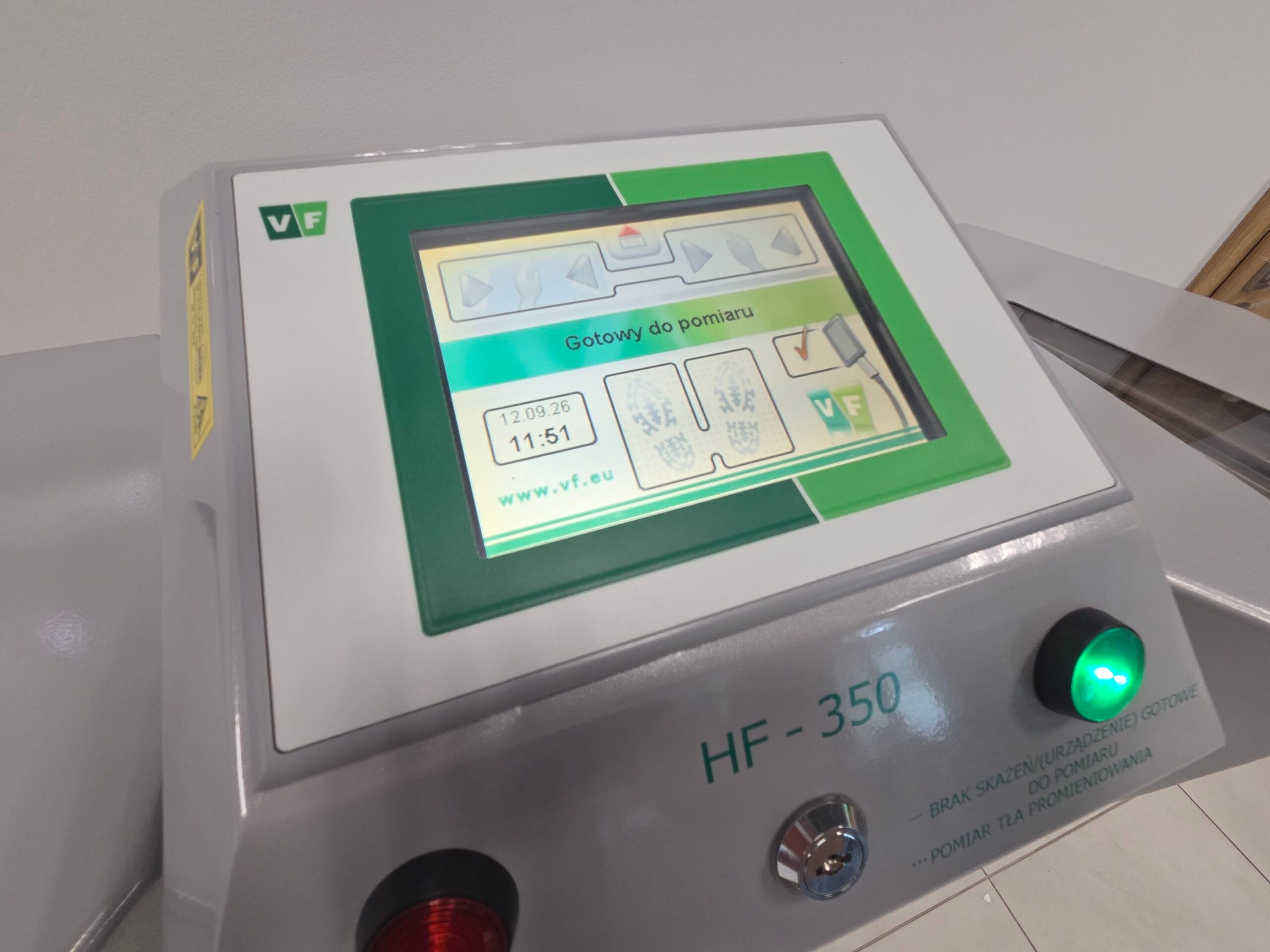
Why measure at all if it is “only” an open day
The same check applies to staff leaving the site every day - it is a routine, passive verification procedure, not a response to anything unusual. Rather like an airport security gate: it is always there, whether or not anything special is happening.
Open day visitors could also ask for a personal direct-reading dosimeter. Ours did not beep, because everything was normal - no surprise there. The reading it shows is natural background radiation - from the ground, the air and space - not from the repository.
A curiosity: the former fort also has natural value - ZUOP builds so-called hotels there for wild pollinators and insects, and puts out water bowls during summer droughts.
How the waste is stored there
Short-lived low- and intermediate-level waste goes into the converted dry moat of the former fort. The bottom and slopes of the moat were reinforced with a 20-centimetre layer of concrete, and the metal drums of waste are laid in layers and regularly encased in concrete, until the whole is covered with a 40-centimetre layer of concrete with additional bitumen insulation. This is the very structure we walked on during the tour. Spent sealed radioactive sources go separately - into an underground concrete facility of 17 chambers, which are filled with concrete and tightly sealed once full.
Before waste can enter the repository at all, it must meet a specific criterion: leachability - the rate at which a radioactive substance could be washed out of the waste form - must not exceed 10-2 g/cm²/day for low-level waste and 10-3 g/cm²/day for intermediate-level waste. In practice this means that Polish law does not allow liquid waste to be accepted at all - it reaches the repository only after solidification, most often by cementation.
Before the waste even reaches Różan, it passes through ZUOP's headquarters at the Świerk nuclear centre. There it is sealed in tight containers of 2 kinds: the smaller one is called a hobbock and the larger one a steel drum. Open such a container and you would basically see a block of concrete. Only in this safe form, by special transport, does it travel to the repository.
Where such waste comes from and how it is classified
- Very low-level (VLLW) - mainly from dismantling nuclear installations: concrete, steel, insulation.
- Low-level (LLW) - everyday operational waste: gloves, protective clothing, air filters, with short-lived isotopes.
- Intermediate-level (ILW) - ion-exchange resins, filters, reactor components - they need shielding but do not generate heat.
- High-level (HLW) - above all spent nuclear fuel. KSOP does not accept it - that is a separate topic, which I come back to later in the text.
The short-lived / long-lived distinction refers to the half-life of the isotopes: after a few decades short-lived waste decays to a level close to natural background, while long-lived waste needs isolation for much longer.
KSOP in numbers
Waste from the EWA and MARIA research reactors produced before 2014 was sent back to Russia - the original supplier of that fuel. The largest shipments took place in 2010 - over 450 kg of fresh and spent fuel, in 5 separate transports - and in 2012 - about 90 kg from the Maria reactor, each time under the supervision of the International Atomic Energy Agency (IAEA). It is worth setting this against a question I asked myself before the visit: is there actually much of this waste in Poland? Over 60 years of operation of 2 research reactors, Poland's entire output of low- and intermediate-level waste - operational and decommissioning waste combined - fits into a volume of less than 2 Olympic swimming pools. Spent nuclear fuel is a separate category - high-level waste, which KSOP does not accept. It is a matter for the future: for the 2 nuclear power plants planned in Poland it is estimated that after 60 years of operation they would produce a total of about 6,700 tonnes of uranium in spent fuel (about 250 m³ by volume) - today Poland has no operating power reactors yet, so there is no such fuel either.
The zone you cannot photograph
The checkpoints I passed stood close to the inner, more heavily protected part of the site - I saw a “ZAKAZ FOTOGRAFOWANIA” (No photography) sign there in 5 languages. All my photos were taken where photography was allowed.
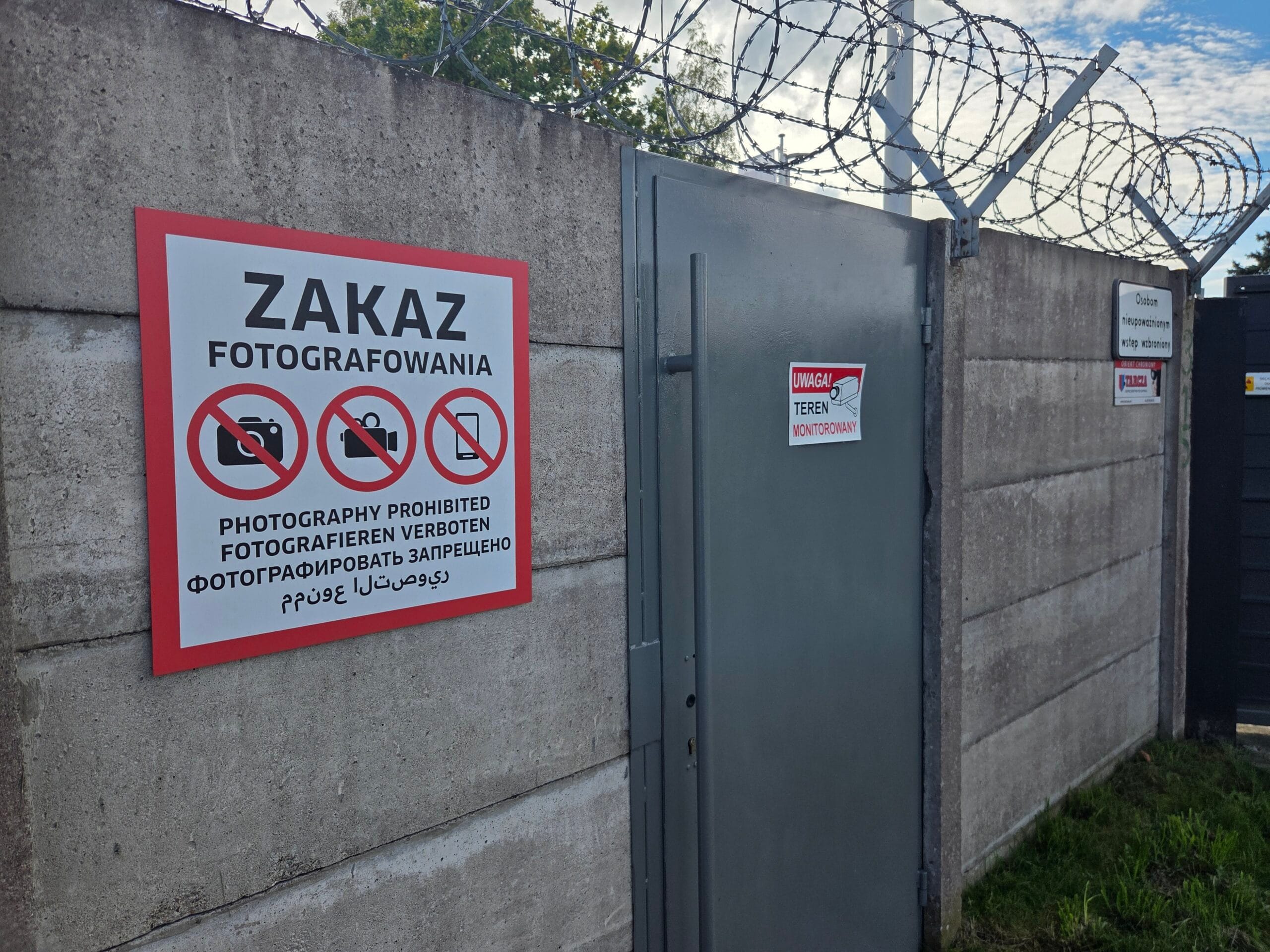
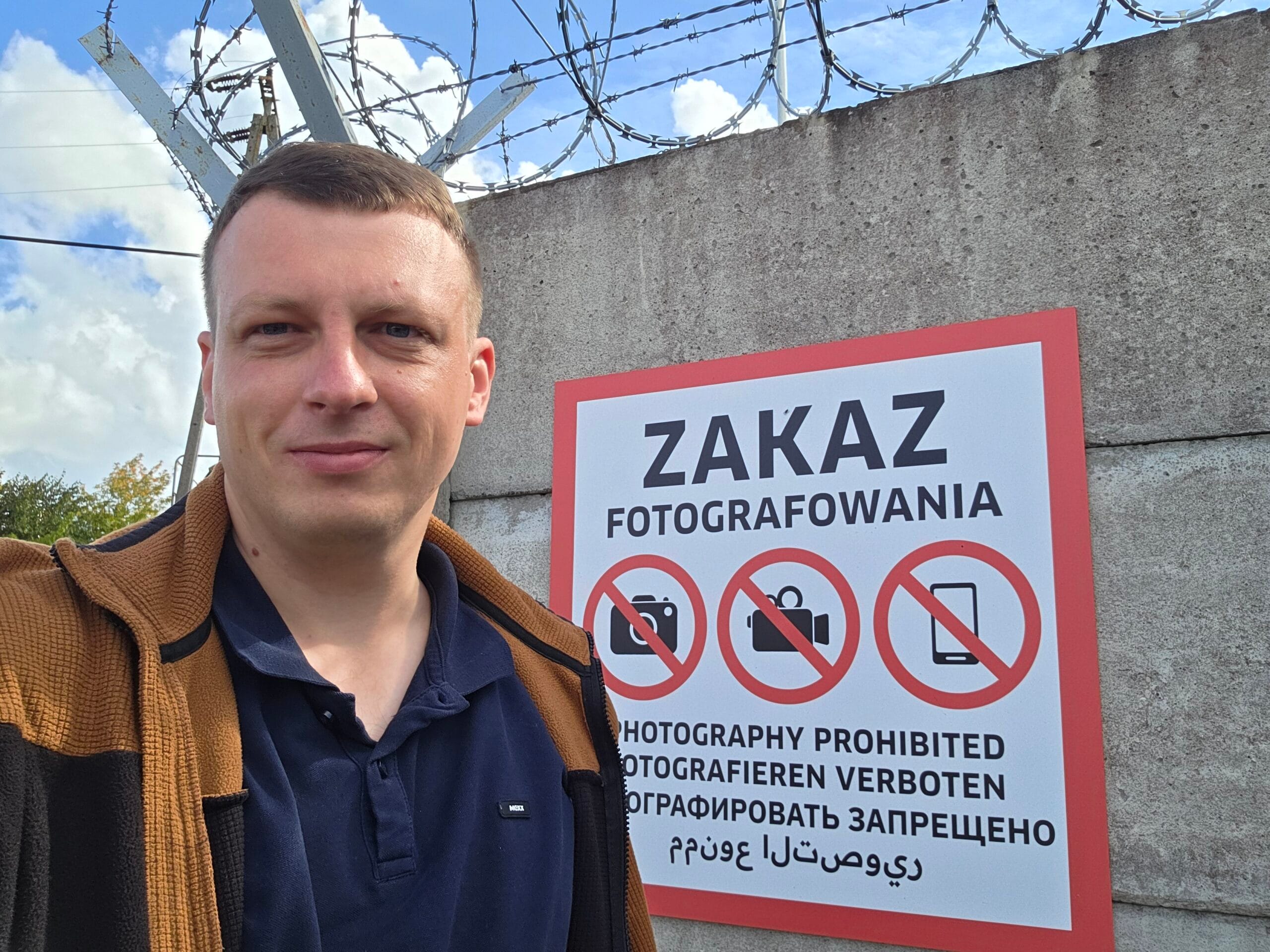
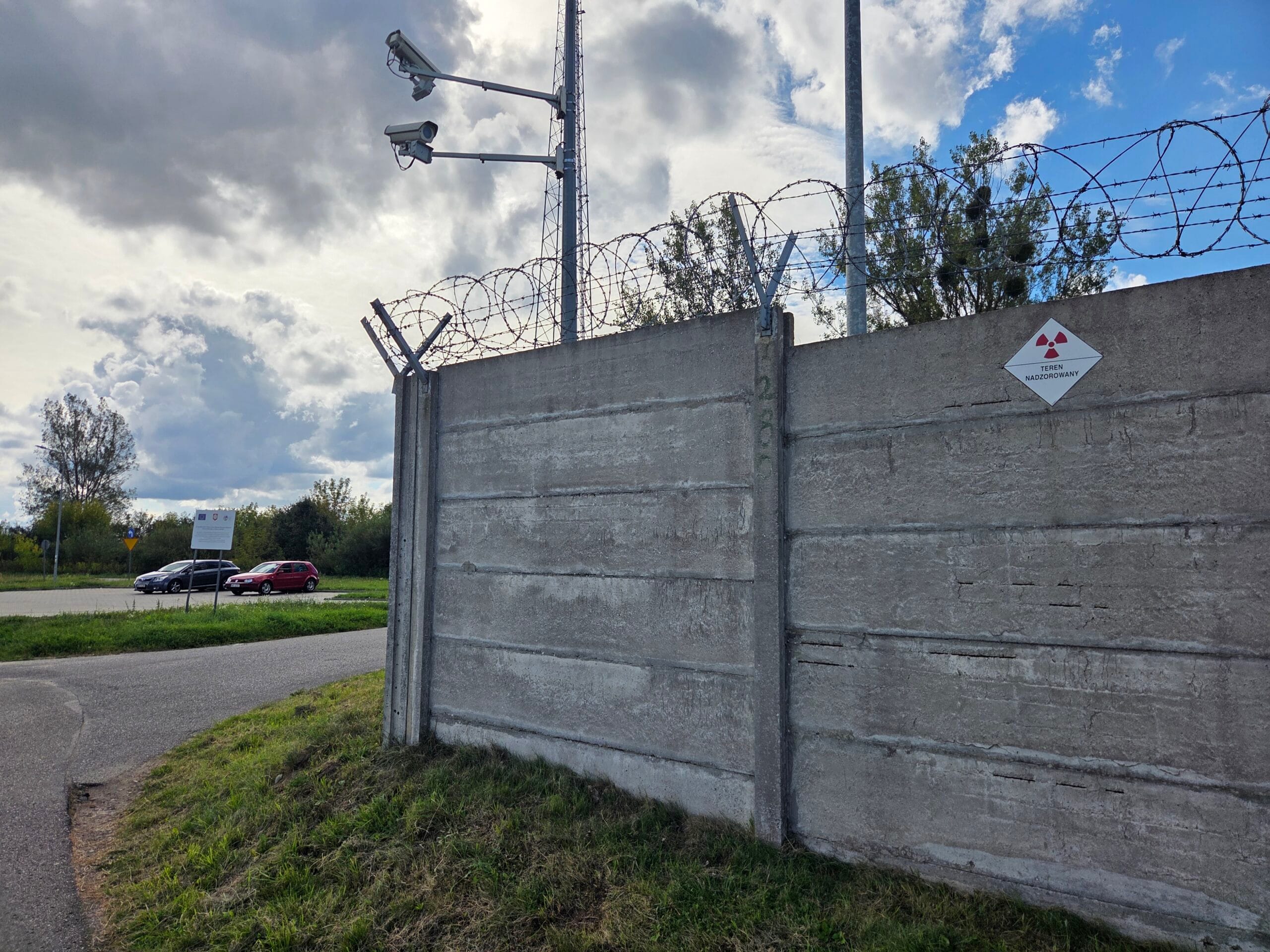
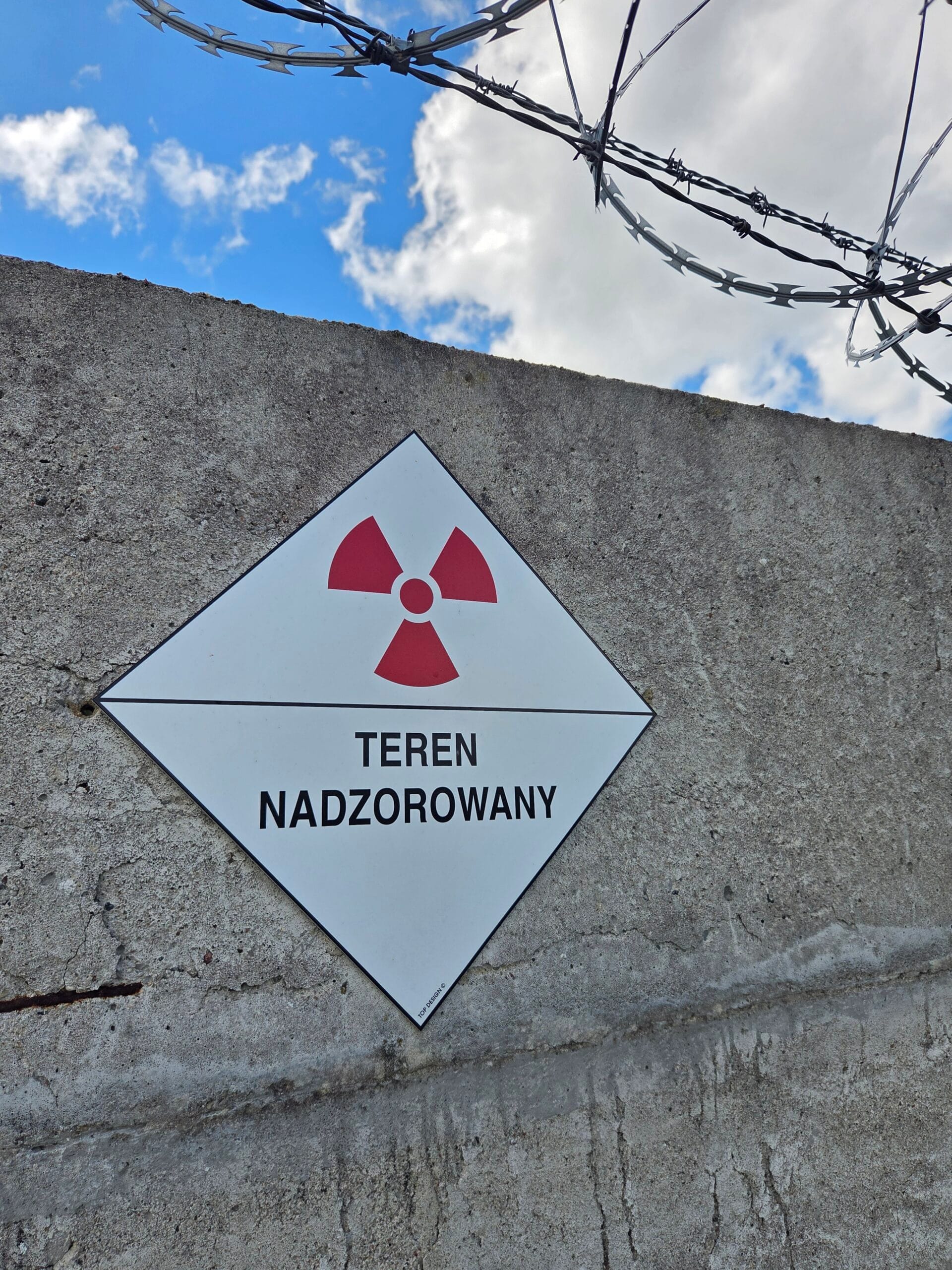
Signage and fencing of the plant site
A mural that turns a fence into a history lesson
The outer fence along the access road has been turned into a mural on the history of radioactivity and scientific work - with a portrait of Marie Skłodowska-Curie, the Nobel medal, a model of the atom, test tubes and a worker with waste drums. It is one of the good places for taking photos - I also shot video there for 2 short reels.
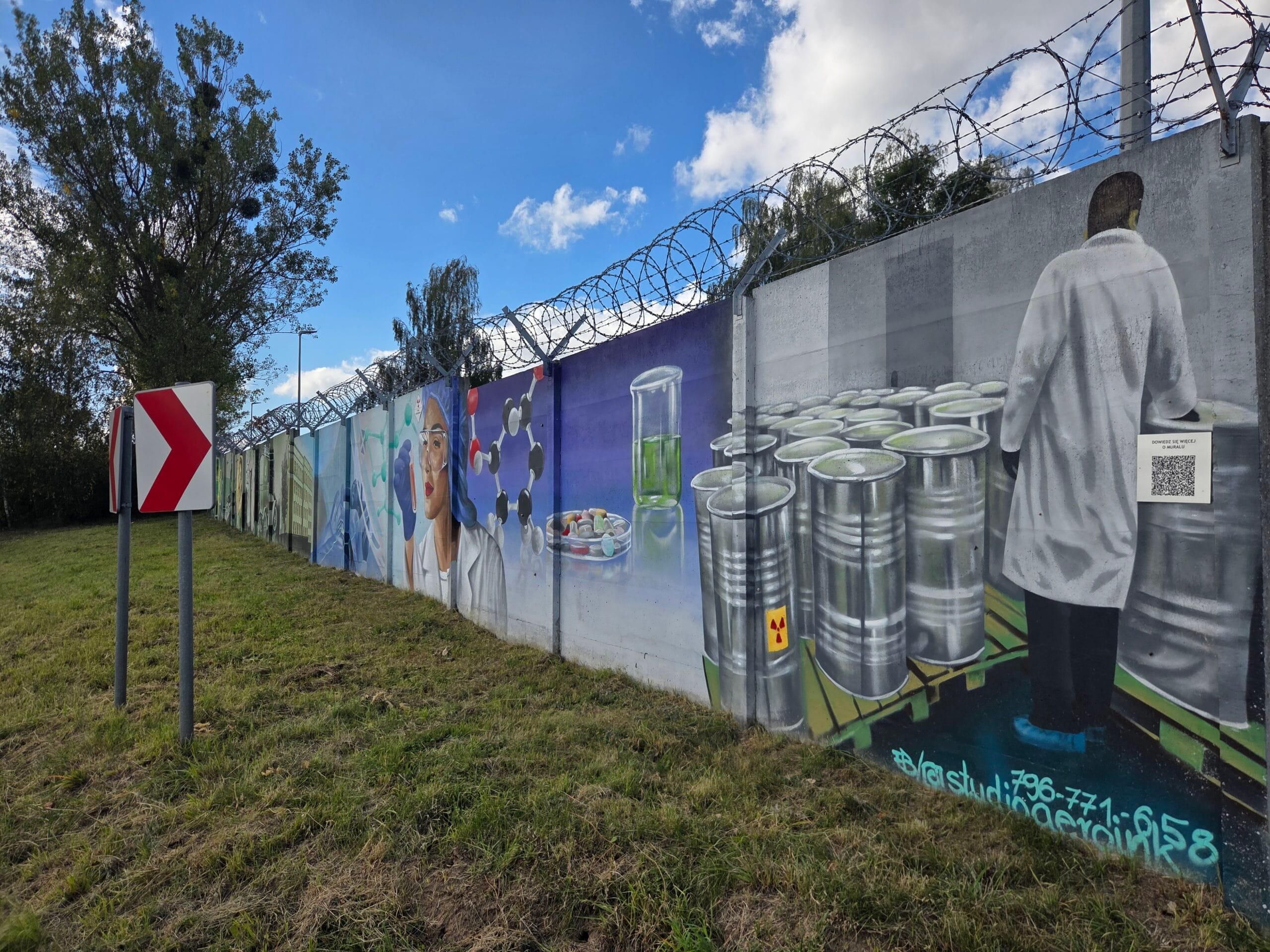
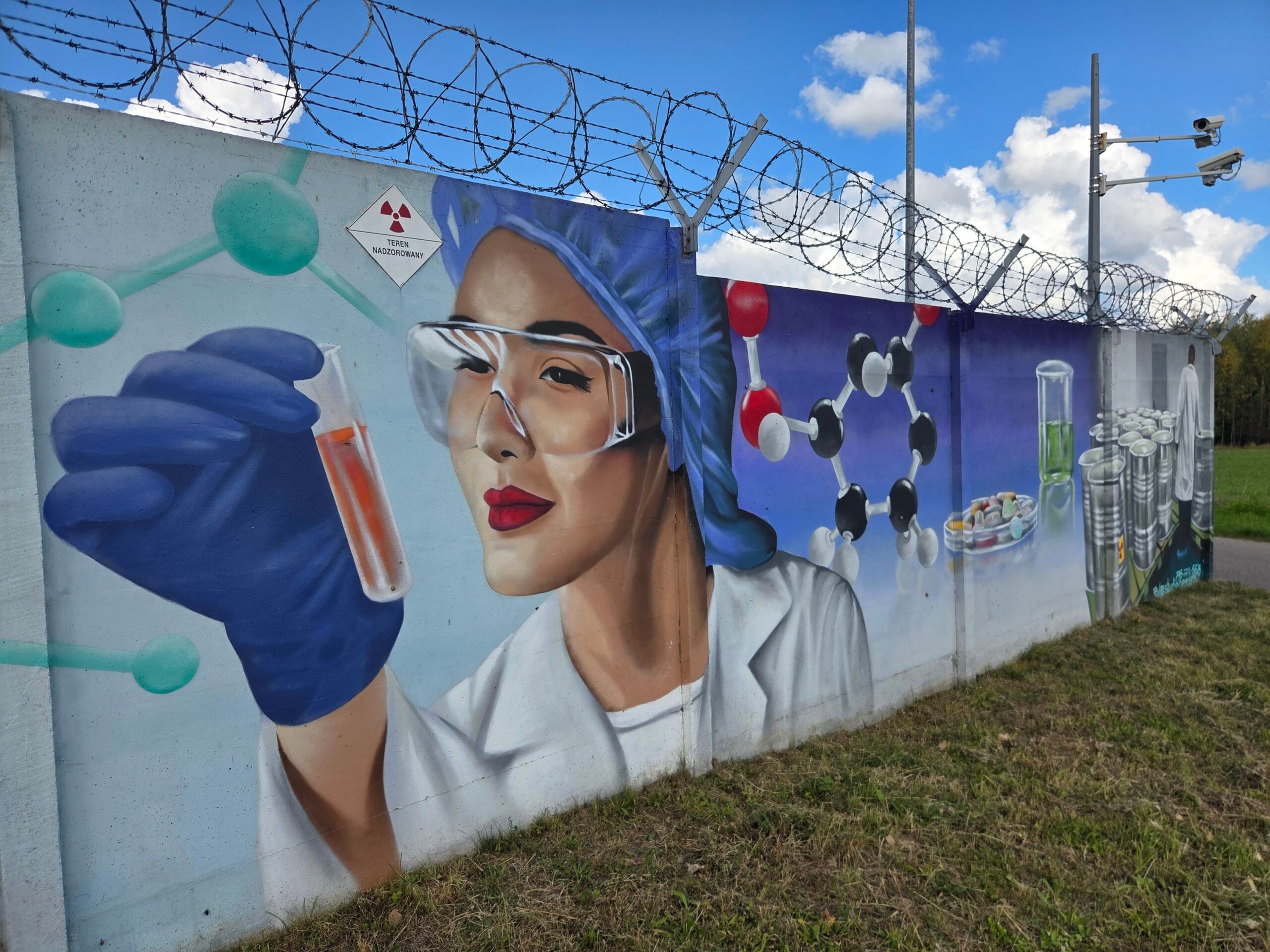
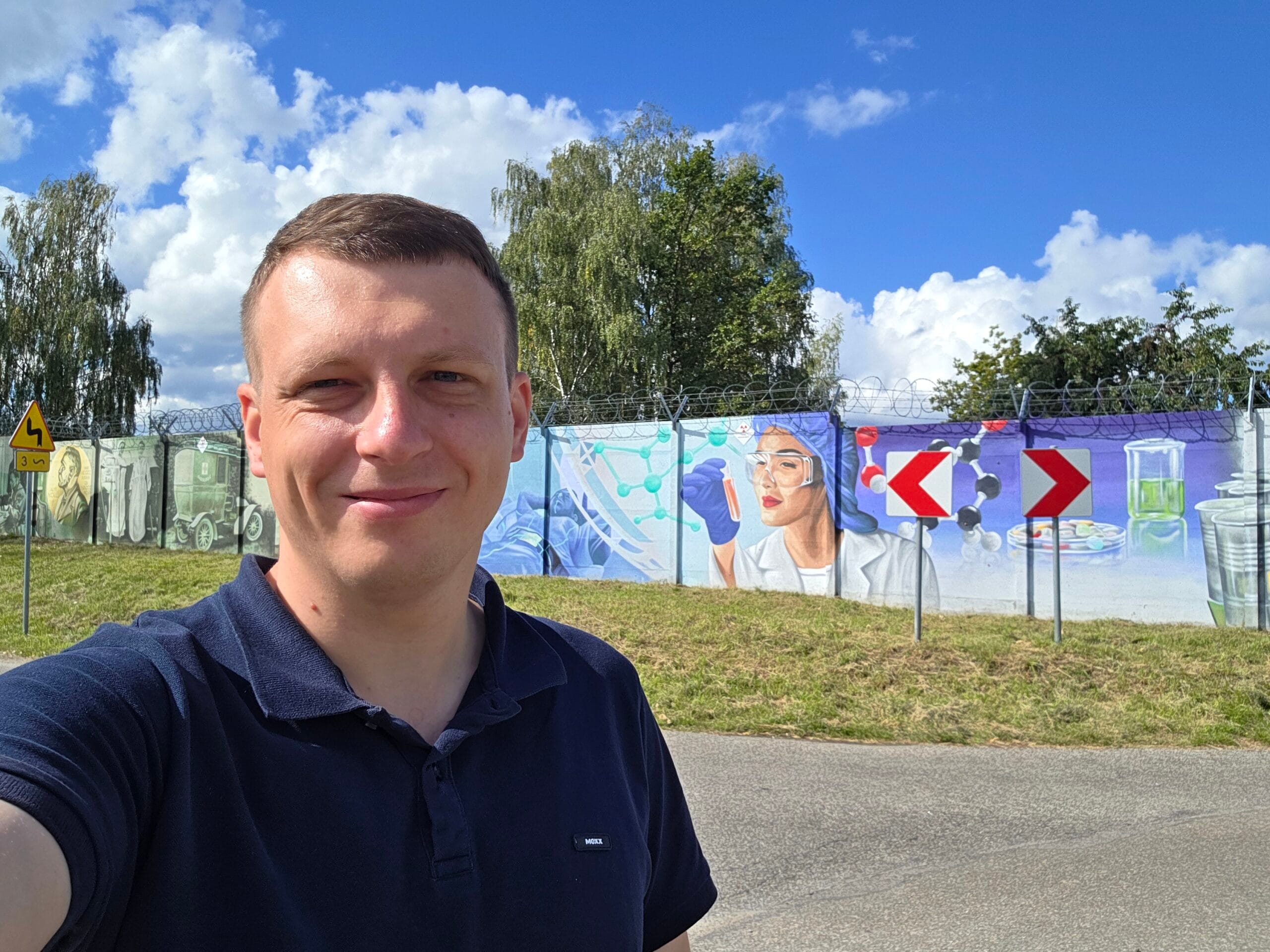
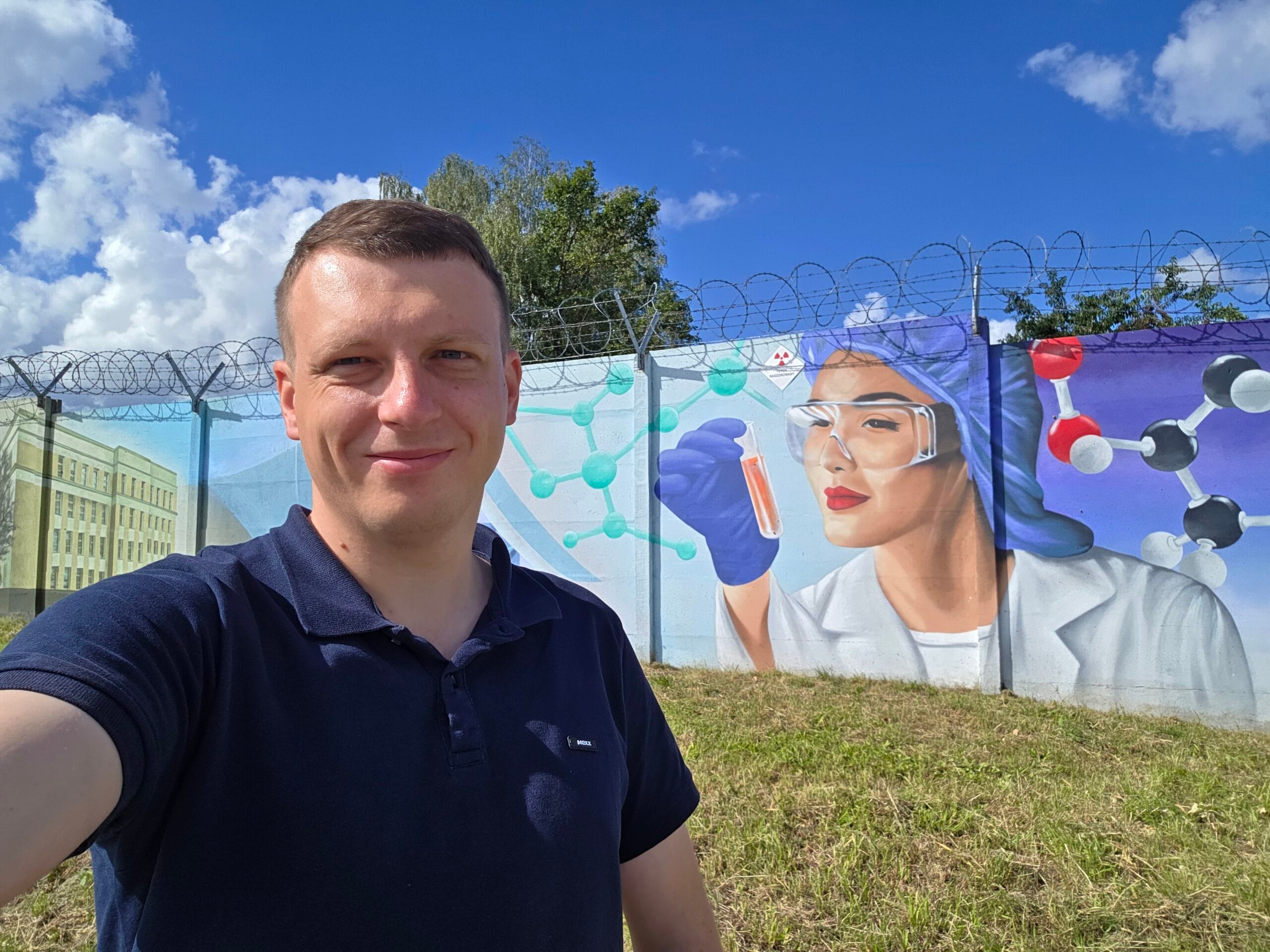
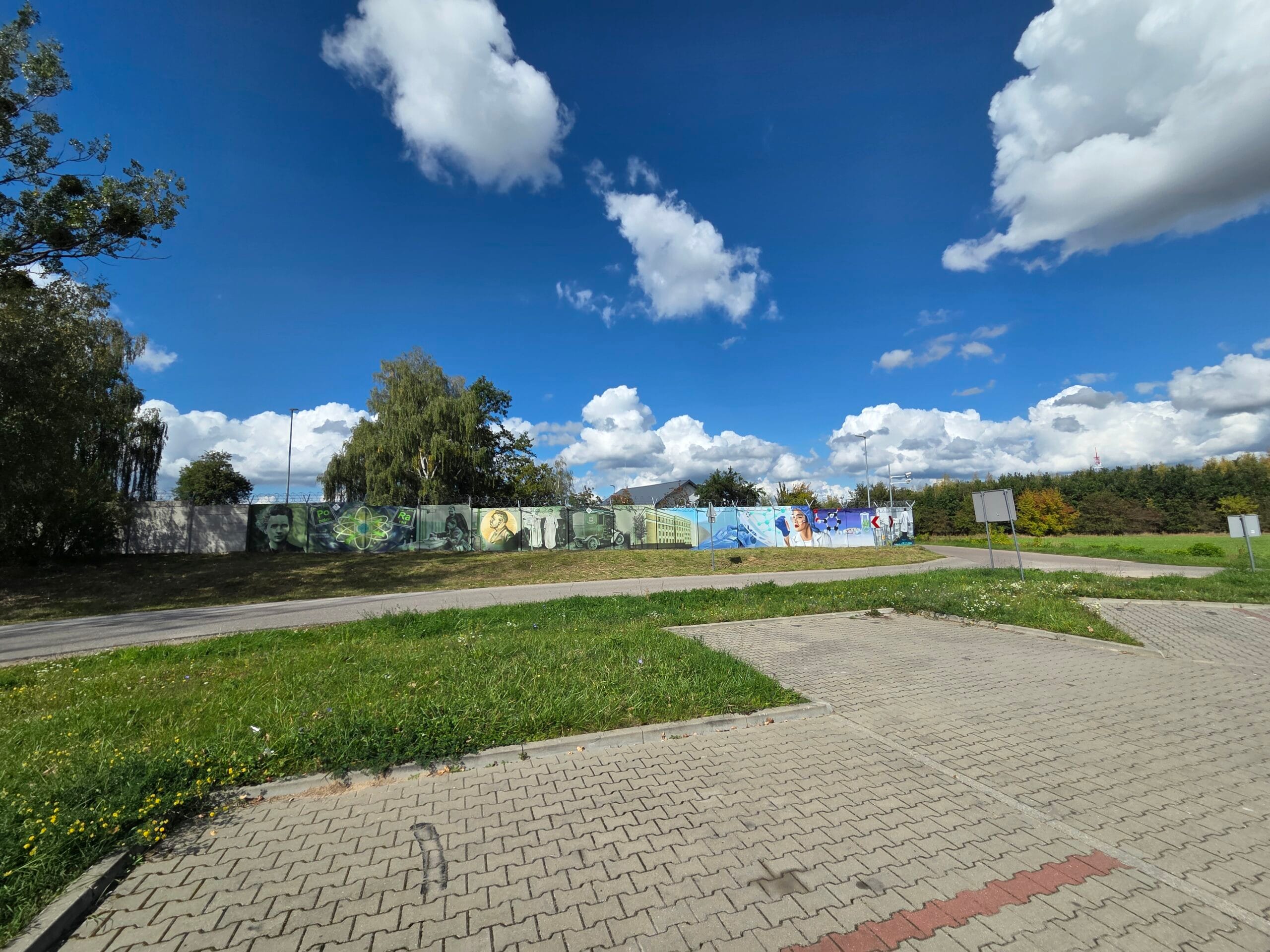
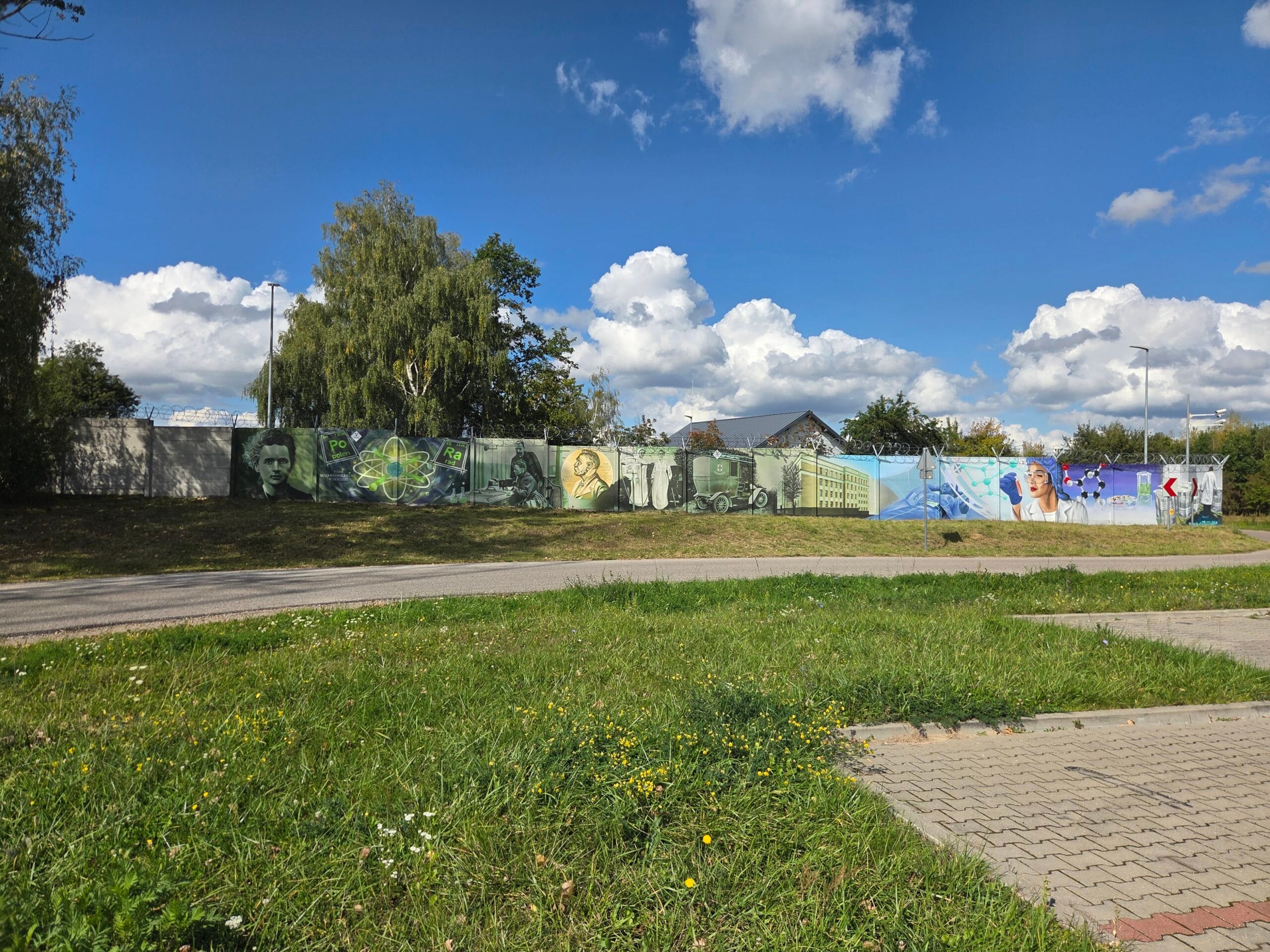
Mural on the KSOP fence
ZUOP's film and album
For the anniversary ZUOP made its own commemorative film - a short, well-made summary of the repository's history and work.
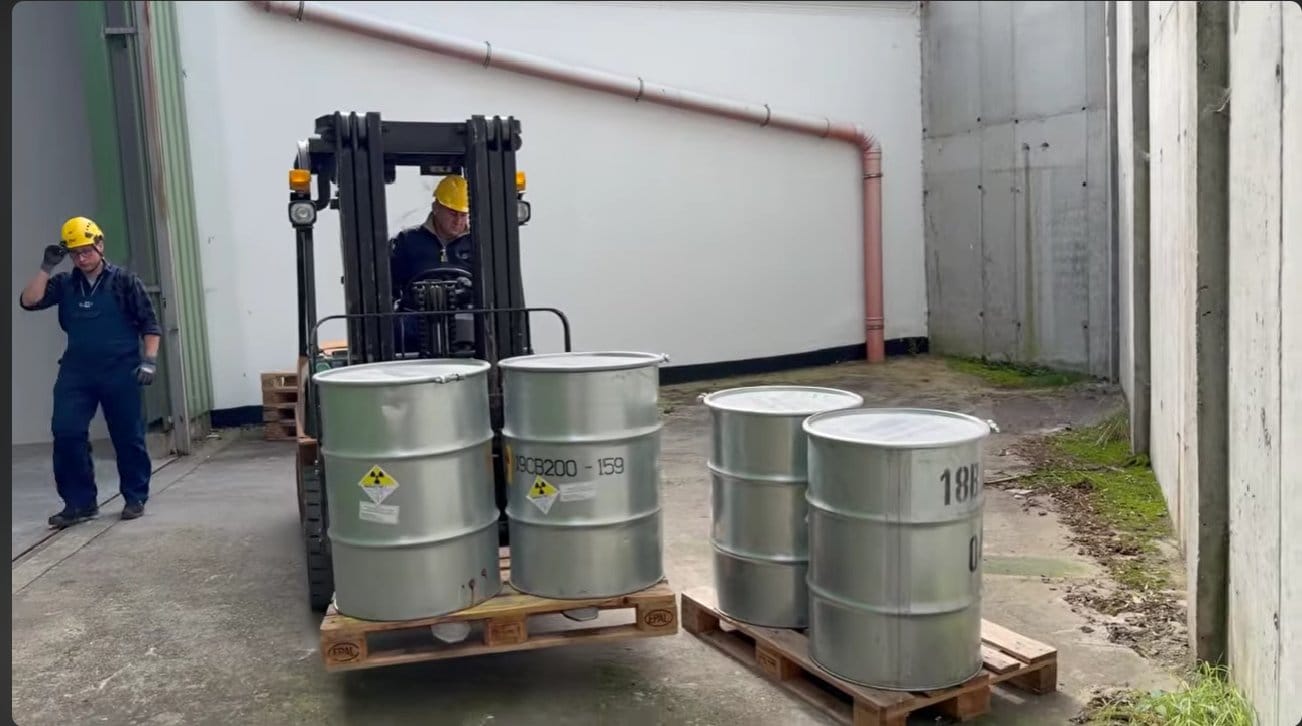
Film: ZUOP, official YouTube channel - commemorative film for KSOP's 65th anniversary
ZUOP also published an album from the whole open day on its official Facebook page:
Album: ZUOP, official Facebook page
What next for radioactive waste in Poland
KSOP in its current form is not a solution for the coming decades - work is already under way on a completely new near-surface repository for low- and intermediate-level waste: an area of about 100 ha, a planned operating life of about 100 years and a dose limit for residents near the facility of 0.1 mSv a year. To put that in perspective: the average person in Poland receives about 4.86 mSv a year - of which about 2.55 mSv is natural radiation, mainly radon, and most of the rest is medical diagnostics - for example X-rays and CT scans. So 0.1 mSv a year adds a few per cent to natural background alone.
What it already costs the state today: the municipality of Różan - just for hosting the EXISTING KSOP - receives compensation from the state budget equal to 400% of the municipality's property tax revenue for the previous year, with a statutory cap of PLN 10.5 million a year; in 2024 it was exactly PLN 10.5 million - including PLN 5 million for capital investment and PLN 3 million for education. A similar mechanism - and a similar maximum amount - is to apply to the municipality where the new repository will be built.
The municipality hosting the new repository can also count on stable jobs, study visits and conferences with guests from around the world - using local accommodation and catering - as well as corporate social responsibility activities for residents.
A separate topic, much further off, is spent nuclear fuel from future power plants - high-level waste, for which a deep geological repository is ultimately planned. Today 44 potential rock formations in Poland are being considered - salt deposits, claystones and crystalline rocks. Until it is built, spent fuel is to be stored at the power plants themselves for 30-50 years.
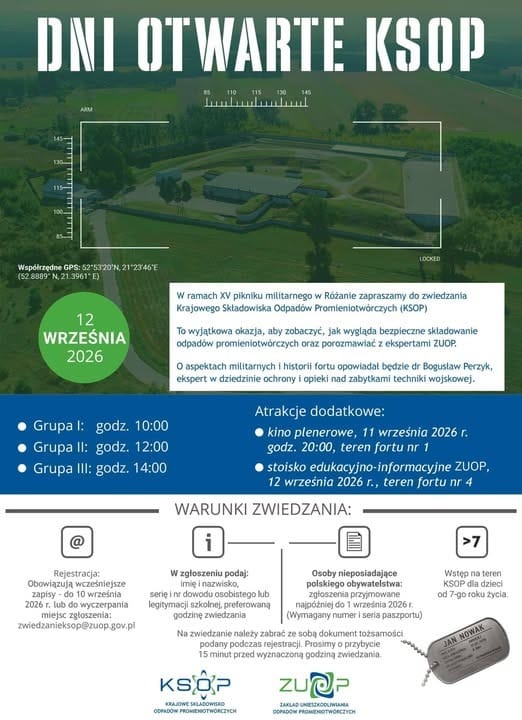
There was also a table with merchandise for KSOP's 65th anniversary. Nice souvenirs: pens and a mug, plus a bag, krówki fudge sweets, tattoo stickers and photos. Next to it was a table where you could press your own badge on a special press.
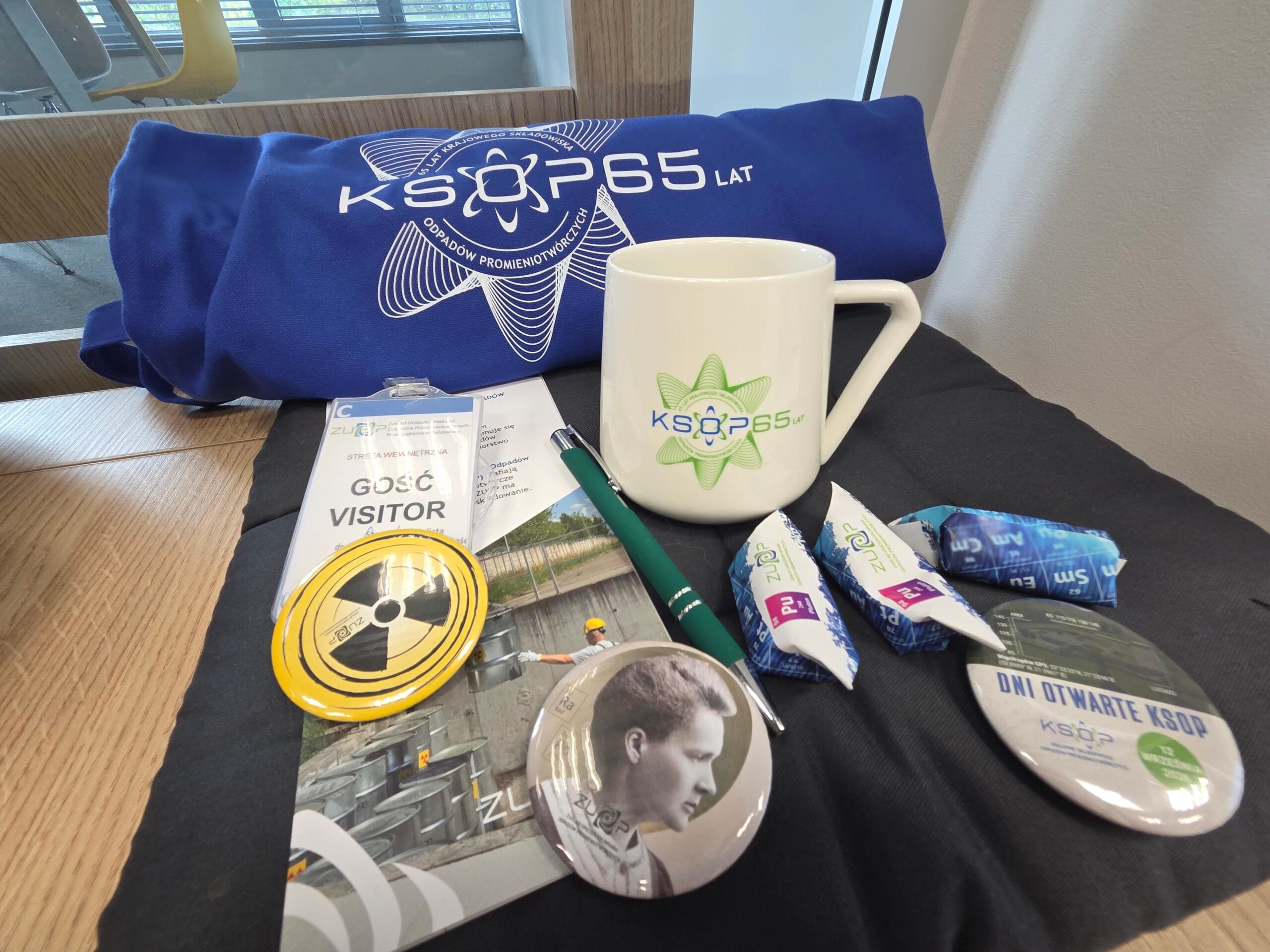
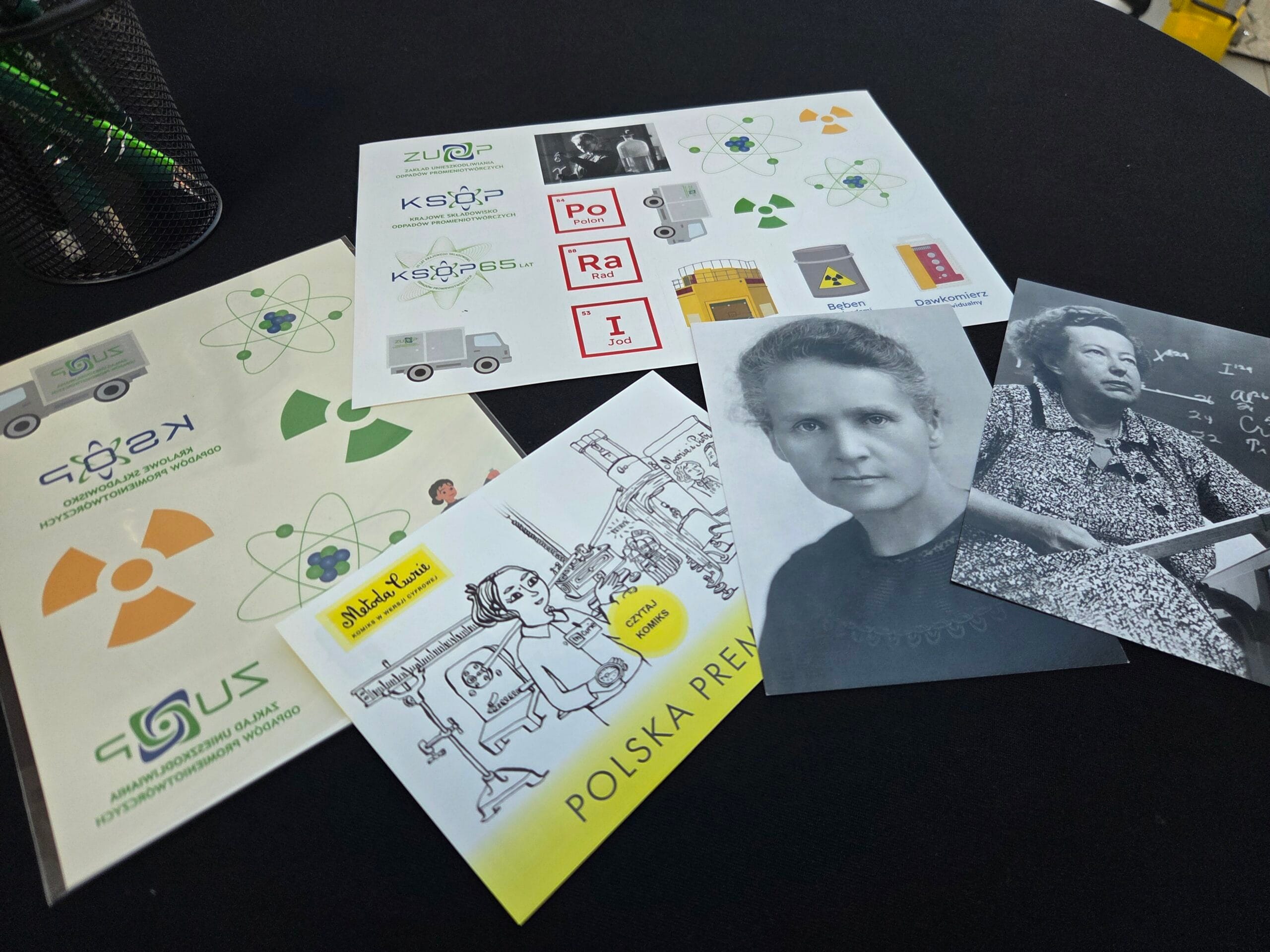
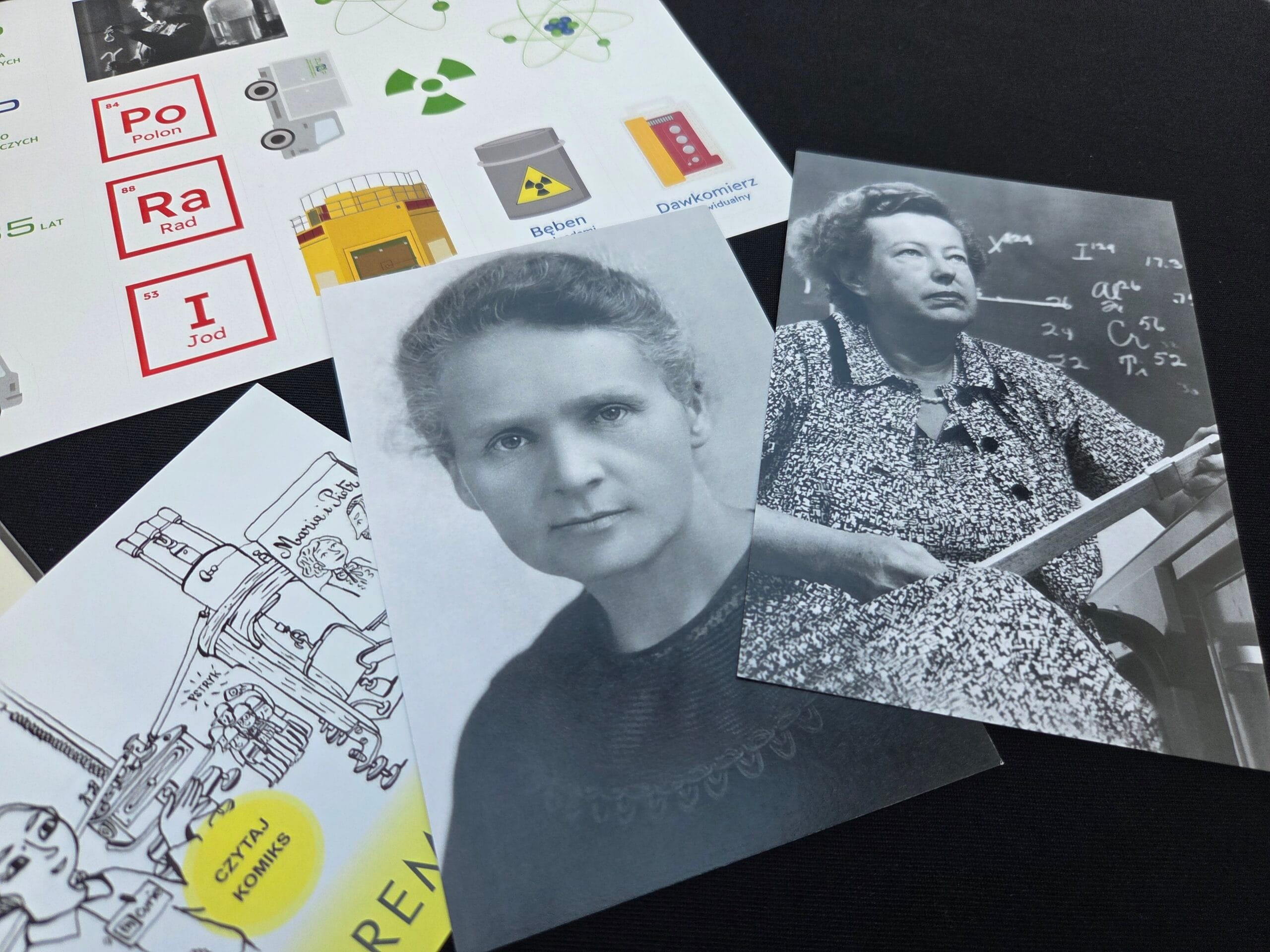
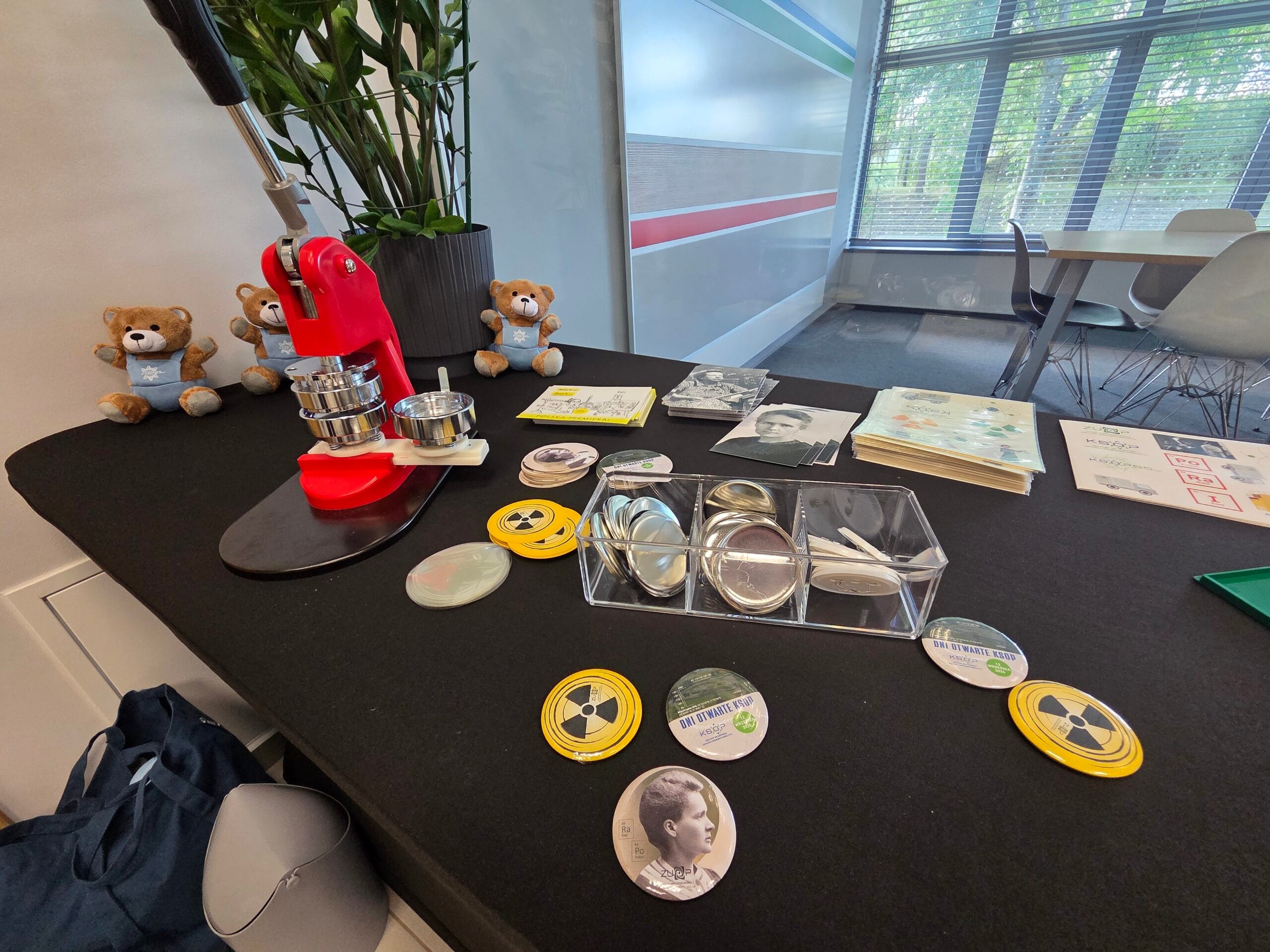
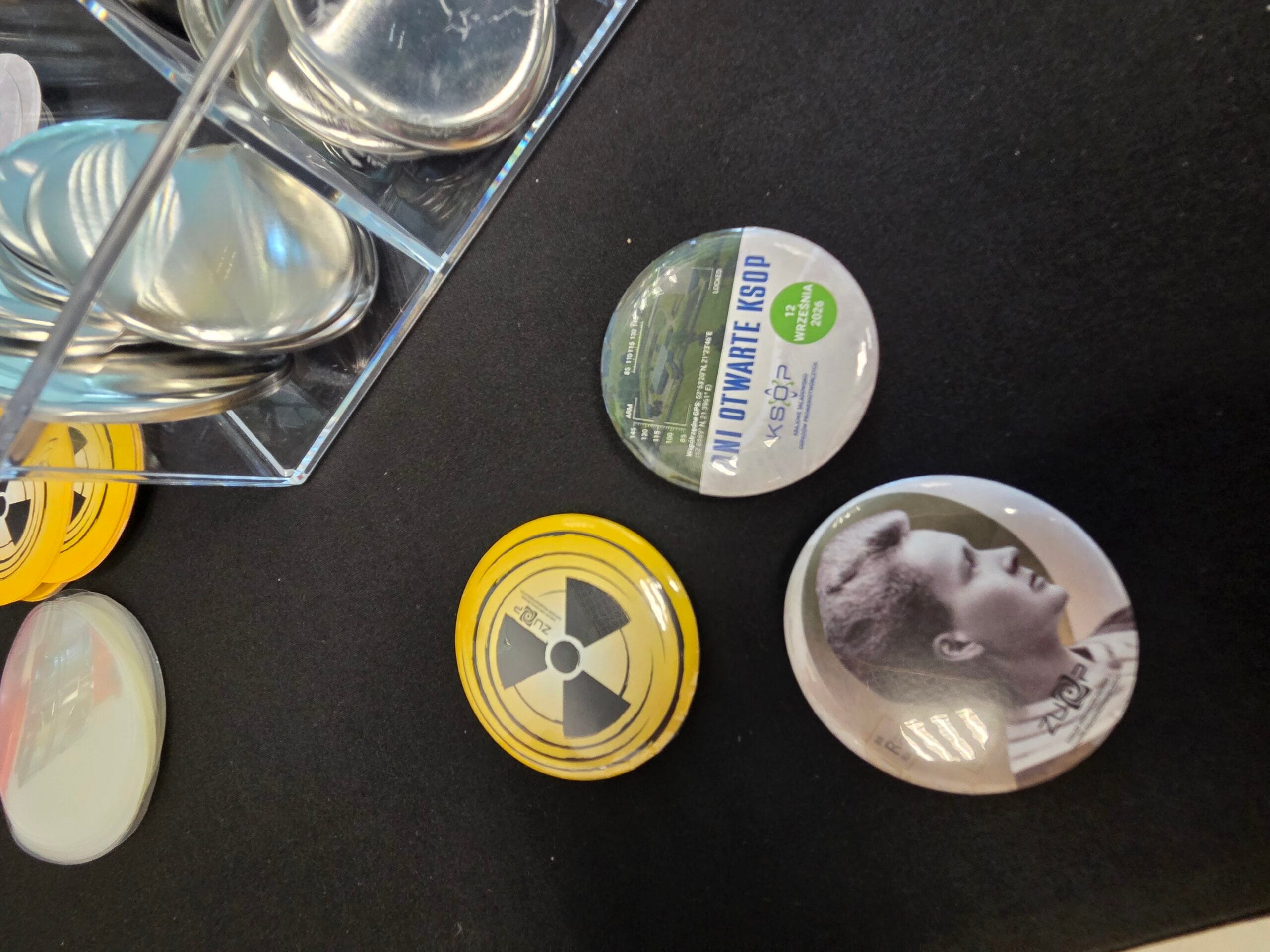
Merchandise for KSOP's 65th anniversary
Who it is for and is it worth it
KSOP can be visited only during open days, held several times a year - you cannot just walk in on any day. It is for everyone: you can come alone, with family or with friends, and children aged 7 and over can join the tour too. Fans of nuclear technology will enjoy it, but so will people who know nothing about nuclear - you just need to look and listen. It is a good way to spend time differently and broaden your horizons. I recommend it - there is nothing to be afraid of.
At the end I signed the guest book in person.
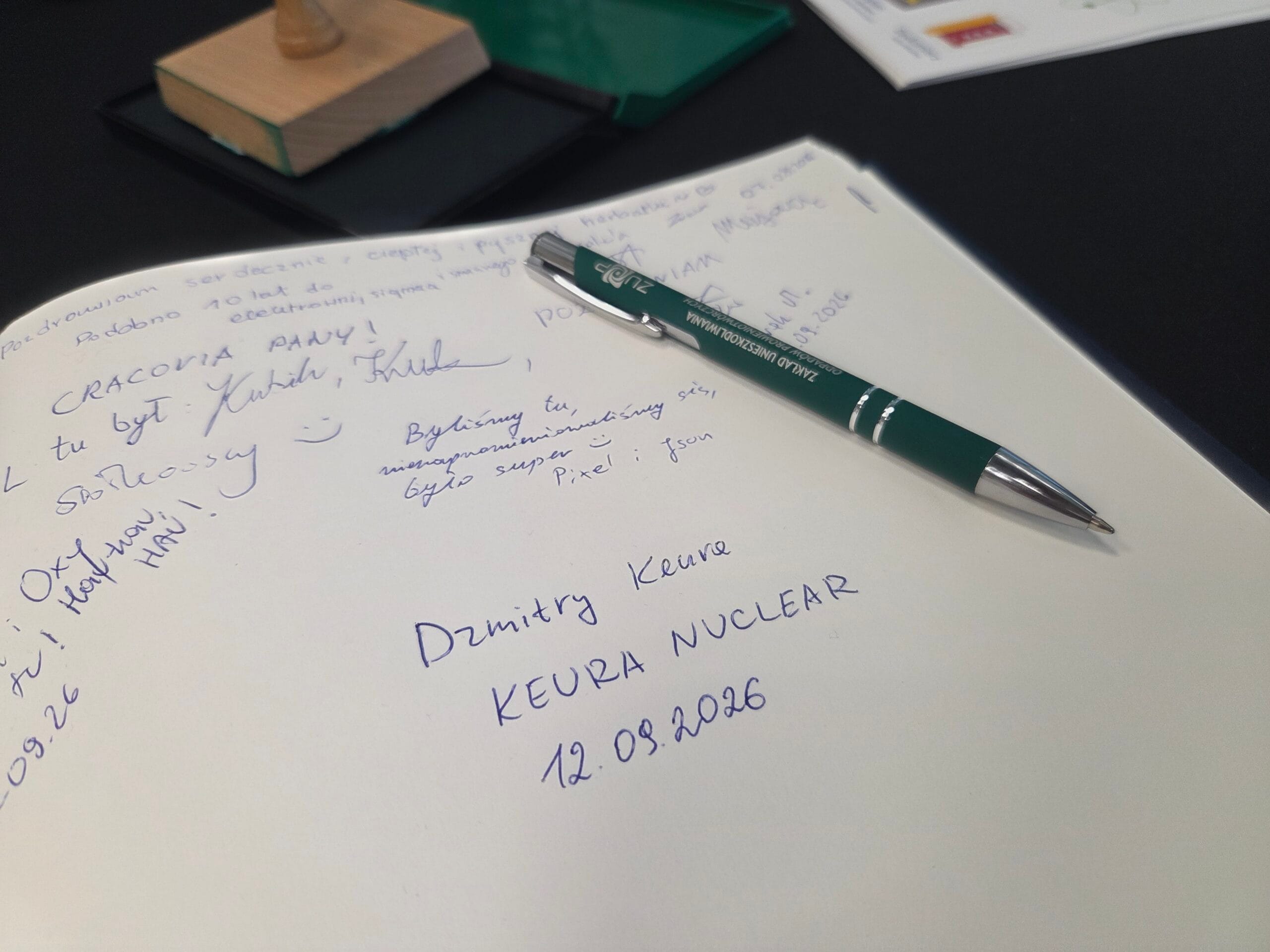
In my day-to-day work I deal with quality and safety in the nuclear supply chain, so for me this visit was also a reminder that safety culture and transparency towards the local community do not end with documentation and procedures.